Application & Construction
Autoclaved aerated concrete recycling
Pilot project proves Xella's impressive capabilities in the circular economy
Loading...In Germany, Xella already implemented the reuse of AAC in its production plants. Production waste and cutting residues are processed by crushing and fed back into ongoing production. For Xella, this reused material is a valuable substitute for primary raw materials.
Supporting and implementing the circular economy is a key pillar of the Group's sustainability strategy. In 2022, Xella already reduced raw material consumption by 4% by increasing the use of production residues. This is in line with Xella's commitment to stop the landfill of AAC production waste by 2025. Moreover, since 2015, Xella Germany has run a return system for AAC residues from construction sites of new buildings. Instead of handing such residues to waste disposal companies, they are collected on-site in big bags and sent back to the production plant. At the plant, the returned material is processed by crushing and milling and finally reintroduced into AAC production.
However, one important aspect that still requires further attention is that of recycling AAC products obtained from the dismantling and deconstruction of old buildings – are these demolition products also suitable for high quality re-utilization?
Increasing amount of AAC waste material
AAC has been produced and installed in Germany since the 1950s. Due to the typical service life of a building of 70 to 80 years, there was hardly any AAC waste emerging until the year 2000. In the last ten years, however, the amount of old AAC disposed of in landfills has increased. To counteract this development, the company is working on the question of how and to what extent AAC obtained from the demolition of houses can be reused in the manufacturing of new AAC products. The quality of the old AAC is the key factor to consider in this regard. The material must be analyzed before it is recycled, at least on a random basis. Already years ago, the Xella Technologie- und Forschungsgesellschaft mbH (Xella T&F) confirmed that it is possible to obtain new, high-quality AAC from old AAC in terms of processes and materials.

But is recycling of AAC from the deconstruction of buildings also possible on a large scale? And is it possible to recycle such material in an environmentally friendly way, thus ensuring a more sustainable use of this valuable building material? This would not only conserve resources but also open up new perspectives in the construction industry. With a pilot project conducted in Puchheim, a small town near Munich, Germany, Xella could demonstrate that it is indeed possible.
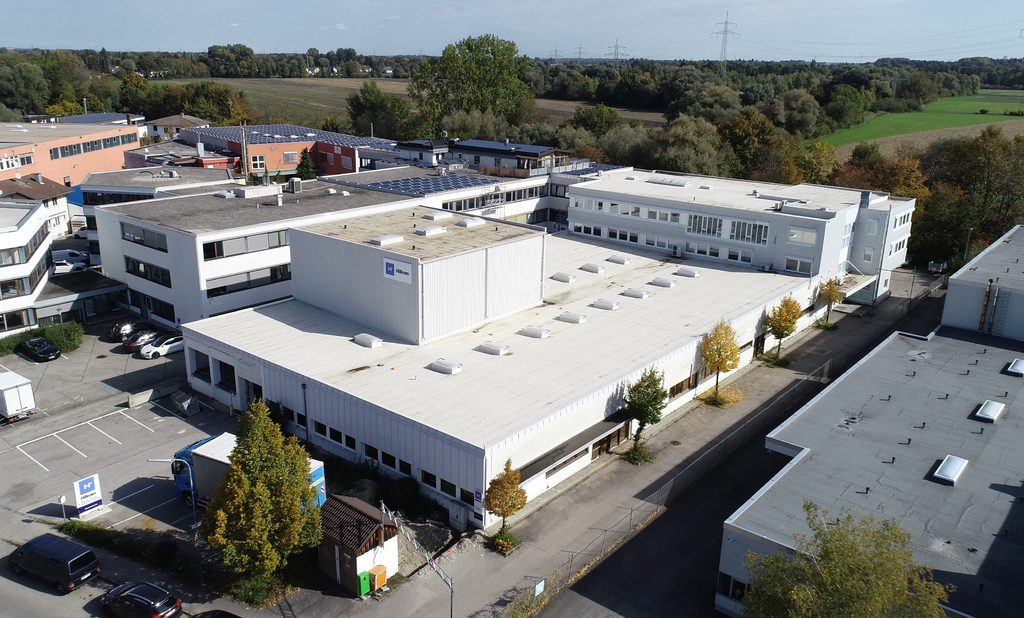
The object, a factory hall, was located in the industrial park Puchheim and had been used as a commercial facility for more than 50 years. With the previous tenant moving out and the changed requirements of a new interested party, owner Arne Berger was faced with a difficult decision: "The old hall was actually still in good structural and aesthetic condition, but my new tenant needed a bigger, wider and higher hall." He decided to demolish the old hall and make room for a new one.
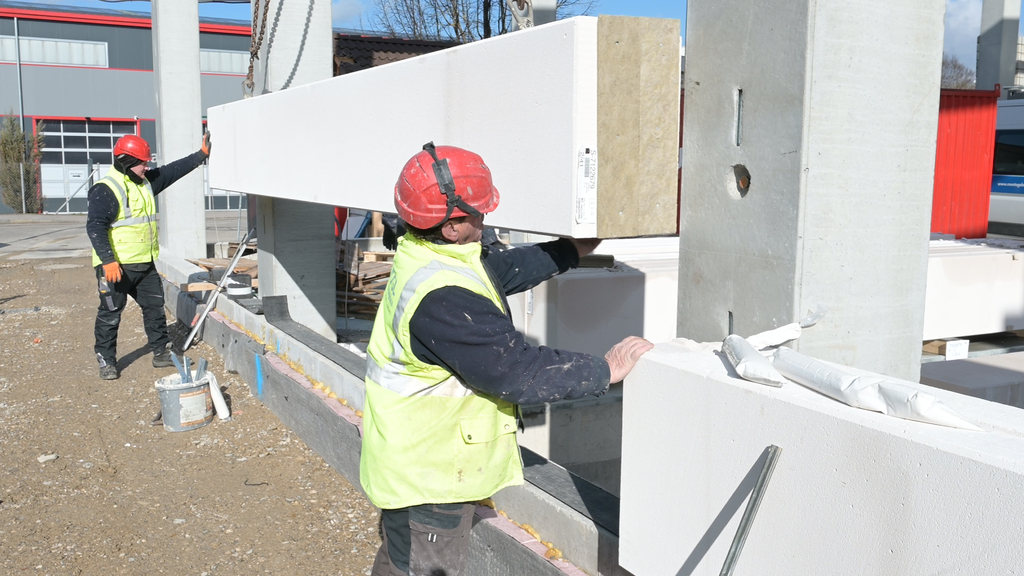
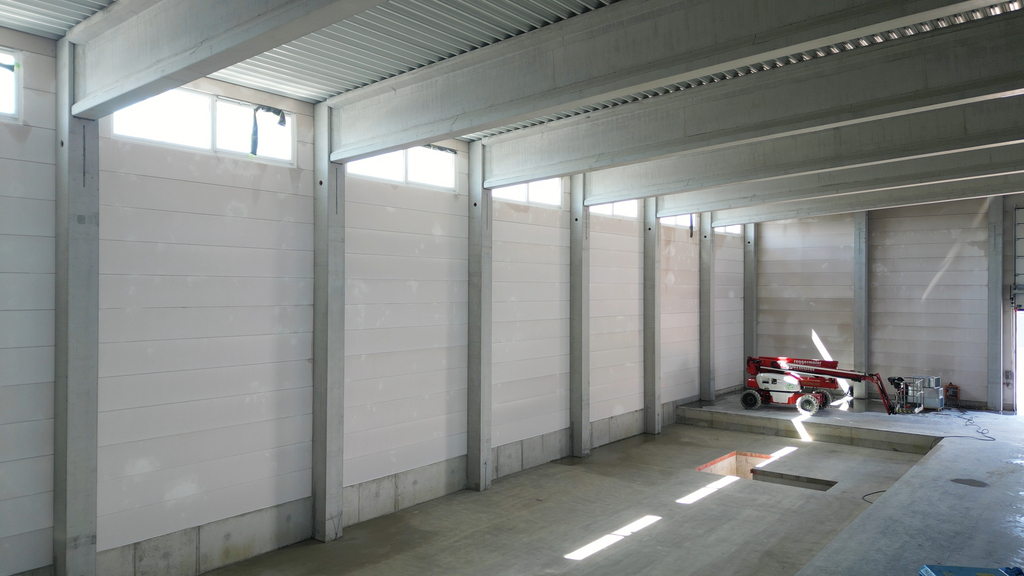
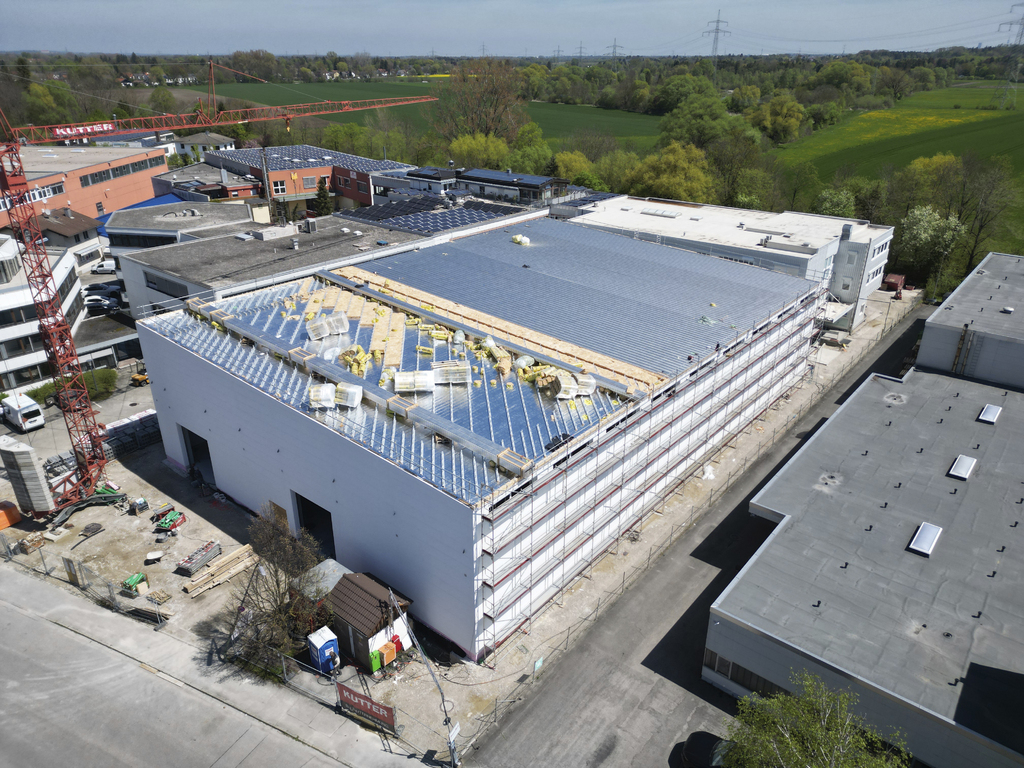
The load-bearing structure of the old industrial hall consisted of reinforced concrete columns and trusses, while AAC wall panels functioned as the building envelope. The Munich-based architectural firm b_arch, led by Sinus and Ulrike Bohnhoff, designed the new hall. The architects opted for a similar load-bearing structure with reinforced concrete columns and AAC wall panels. The new hall spans over 33.5 meters without supports and is 50 meters long. AAC was again chosen for the building envelope because of its numerous positive properties. The choice fell upon Hebel wall elements AAC 3.0/400 (Lambda 0,09).
The new hall has even better thermal insulation values than the old one. At the chosen wall thickness of 365 mm the elements achieve a U-value of 0.24 W/(m²K). The building envelope therefore meets the German efficiency class 55. The material is durable, easy to repair and only requires an exterior coating for weather protection. The architects stress that "in times of climate change, efficient use of resources is essential. As architects, we want to create durable and resistant building envelopes that can be flexibly adapted to changing user requirements."
This is also precisely the central goal of Xella's sustainability strategy. As a member of the construction industry, Xella knows that adaption to climate change is inevitable. For this reason, the Xella Group invested more than 2.8 million Euros in improving the sustainability profile of their products and operations last year and submitted its CO2 reduction targets for 2030 to the Science Based Targets Initiative for validation. Central to this: Xella is reducing CO2 emissions in all areas and along the entire value chain.
This is supported by another advantage of AAC, i.e., re-carbonation, which is a natural process leading to long-term storage of CO2 in cement- or lime-based materials, including AAC. Studies at Xella T&F have shown that during the lifetime of an AAC-building, a sizable portion of CO2 released during the production of primary raw material required for its manufacture is reabsorbed and stored. More information and technical details can be found at https://www.xella.com/en_US/sustainability-at-xella.
It is worth mentioning that upon recarbonation of AAC, CO2 is permanently trapped in its mineral structure, so it is not released even after demolition, which is something that does not apply to wood waste, because it is usually not reused but incinerated after demolition. In this process of wood burning, bound carbon is released again as CO2.
AAC recycling: from waste to raw material
"Cost-effectiveness is always an important factor in the choice of building materials and the construction process," says client Arne Berger. "We took the entire life cycle of the hall into consideration and chose AAC because it is optimal in terms of energy-efficiency, robustness and recyclability." Since the AAC of the old hall was flawless and the building owner committed to sustainable construction, it was not supposed to be discarded in a landfill. "In remodeling projects, we often use old materials such as cables or junction boxes if they are in good condition," says the owner. To find a recycling solution, the owner contacted Xella’s Hebel Wirtschaftsbau, which in turn immediately brought Xella T&F on board. And then it all started.
Closed loop AAC recycling in Puchheim: demolition, processing and new production
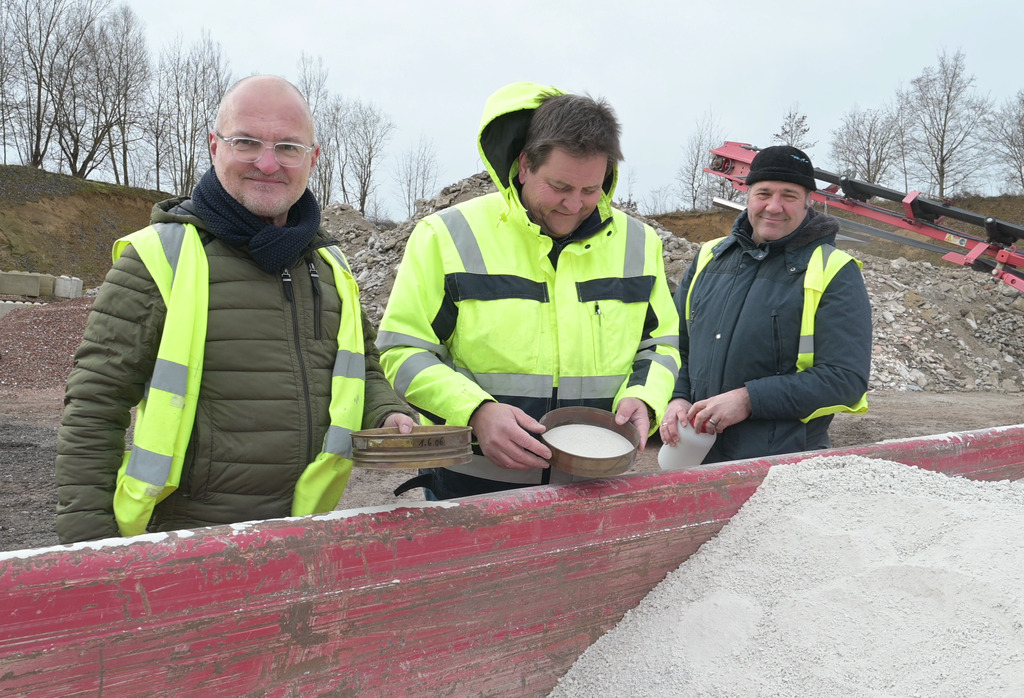
Xella is currently building up local recycling networks. The aim is to comprehensively recover and process old or so-called “post-demolition” AAC. For this, Xella is looking for building projects that serve as pilots to demonstrate the AAC cycle – for example for the Ytong plant Schrobenhausen, Germany, together with its partner Osterried Entsorgung GmbH. Osterried had qualified for the pilot project after having carried out successful preliminary tests with waste AAC. When the object in Puchheim emerged in summer 2022, Dr. Kreft from Xella T&F was thrilled: “The old hall was an ideal candidate for a pilot project. It is in close vicinity of both Osterried and the Ytong plant and, thus, transport distances can be kept short. This makes it advantageous from an ecological and – not to forget – also economic point of view”.
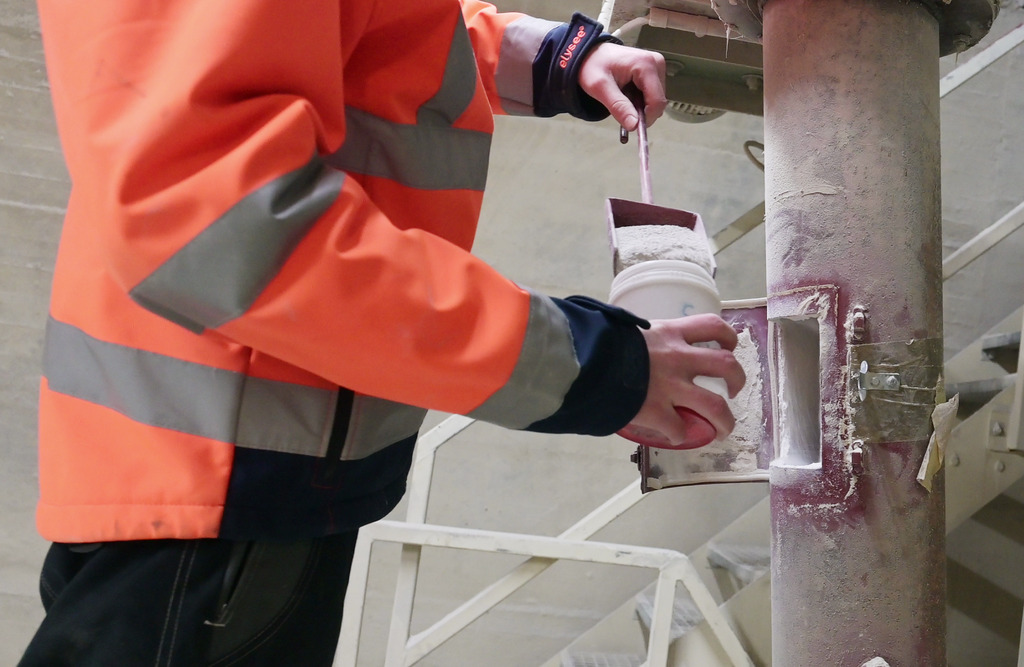
To take stock, the AAC utilized in the hall was first examined for impurities. Since the wall panels had a silicone resin dispersion coating, Xella T&F took samples at various points on the wall panels, crushed the material and examined it by chemical and mineralogical analyses. A trial production on laboratory level revealed that the coating did not affect the quality of the new product. Xella T&F finally released the old AAC for closed-loop recycling.
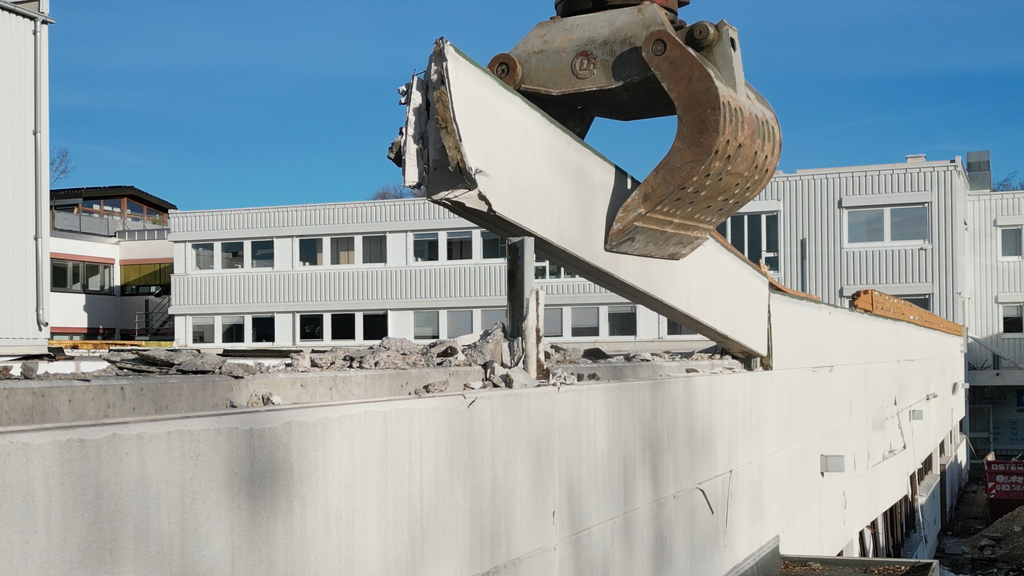
In the autumn of 2022, selective demolition of the AAC wall elements began, during which the demolished AAC was separated from other demolition material such as mineral fiber boards and timber. The volume of the demolished AAC amounted to 225 m3. The demolition material was taken to the Osterried plant and prepared for recycling. The material was crushed, sorted and screened. In the end, 25 m3 of powder from processed wall elements were delivered to the Ytong plant Schrobenhausen. The powder was fed into a hammer mill for secondary crushing to a particle size of 0‑1 mm and stored in a silo. A trial production of Ytong blocks of compressive strength/dry density class PP4‑0,55 containing 17 wt.-% (dry) recycled AAC on March 08, 2023, was conducted free of problems. A total volume of 35 moulds, each measuring 5 m3 was produced. Due to the water requirement of the (comparatively) dry rc-powder, the water/solid-ratio had to be increased slightly. The blocks passed all tests according to the Xella guideline for new products, and, thus, the blocks were released for placement in the market.
In the meantime, the construction of the new hall in Puchheim has been finalized, again featuring AAC wall panels to ensure rapid construction progress.
Urban mining: an important aspect of recycling
The pilot project in Puchheim shows in practice how a closed raw material cycle works at Xella – and basically also at other AAC manufacturers: Starting with the demolition and followed by the processing at a dedicated, trained recycling operator, the transport of processed material to an AAC plant and finally its utilization in the production of new construction materials. Xella therefore takes a pioneering role when it comes to accepting old AAC from demolition and dismantling projects.
Sustainability, resource efficiency and circular economy are becoming increasingly important topics for Xella and its customers and are an integral part of the Group's sustainability efforts. "Architects and planners are increasingly asking for recycled materials," says Andreas Pfanz from Xella’s Hebel Wirtschaftsbau, "And they are explicitly inquiring about the sustainability of our products." Xella is therefore improving its products and processes through targeted research as well as cooperation with associations, institutes, and other companies in the building materials industry. Dr. Kreft emphasizes that such cooperations can ensure that the changeover from a linear to a circular economy can be completed quicker and more effectively.
The project in Puchheim also illustrates that the concept of urban mining is of great importance. Urban mining means using existing resources in urban areas instead of producing new materials. By recycling AAC, valuable material were reused that would otherwise have been discarded in a landfill. This not only reduces the need for primary raw materials, but also the amount of waste that is produced. But the reuse of AAC can also bring other benefits. By establishing a closed material loop for AAC, Xella can decrease the CO2 burden of its products and ensure a stable supply of materials. The recycling of AAC can also create new business opportunities like those related to the recycling of steel or glass.
The reduction of CO2 emissions in all areas and along the entire value chain, the advancement of the circular economy, also with the help of urban mining, and the reuse of AAC are central components of Xella's corporate strategy. They offer a promising perspective for a more sustainable and future-proof construction industry.
Acknowledgements
The authors thank Osterried Entsorgung GmbH for their enterprising spirit to do pioneering work in the field of AAC recycling. The support of the German Bundesverband Sekundärrohstoffe und Entsorgung (bvse) is highly appreciated.
Info-box:
January 2021:
· Kick-off Workshop with the German Federal Association for Secondary Raw Materials and Waste Disposal (bvse).
· Identification of recycling partners for AAC in the vicinity of Xella’s Ytong factory in Schrobenhausen, Germany.
April to December 2021:
· Start of the cooperation between Xella and Osterried Tiefbau und Abbruch GmbH.
· Successful execution of preliminary tests.
· Search for an object suitable for a joint recycling project.
January to October 2022:
· Identification of the Puchheim-object.
· Inventory and material testing at Xella Technologie- und Forschungsgesellschaft mbH.
November 2022 to February 2023:
· Demolition, crushing and processing of reclaimed AAC by Osterried.
March 2023:
· Further processing and utilization of secondary AAC in the Ytong plant Schrobenhausen, Germany.
Completion of the new construction project with reinforced Hebel-elements AAC 3.0/400 (Lambda 0,09).
Contact persons:
Dr. Oliver Kreft, Xella Technologie- und Forschungsgesellschaft mbH
Andreas Pfanz, Xella Deutschland GmbH
Joachim Franke, Xella Deutschland GmbH