Application & Construction
Overcoming issues related to cracking in walls
Steel mesh masonry bed joint reinforcement
Loading...Cracks in masonry appear due to a variety of causes. The code of practice for construction of AAC block masonry (BIS – 6041 – 1985) states various reasons, including:
· Shrinkage due to drying and movement of blocks due to external influences.
· Movement due to fluctuating temperatures.
· Flexural or tensile stresses resulting from loading.
· Stress concentrations around openings, in the masonry course immediately below the beam.
· Movement of partition walls due to the deflection of the supporting structure.
· Long term creep effects.
Murfor Compact (MC) is a steel mesh masonry reinforcement (SMMR) product manufactured by the company Bekaert, Belgium. Since 2016, MC has been in use in various countries in Asia, Europe, and recently also in India. AAC block masonry can be reinforced with steel mesh reinforcement, using general principles like those associated with reinforced concrete.
MC SMMR is a convenient, purpose-made reinforcement for masonry for use in the horizontal bed joints. It limits the risk of cracking and increases the tensile and flexural strength of masonry. The unique structure and user-friendly size of this type of reinforcement optimize the construction process and the use of materials.
MC has been evaluated by competent international agencies like EOTA for use as a masonry joint reinforcement product complying with various international building codes like IRC, IBC CBC, and FBC. MC is also CE labelled and EPD verified.
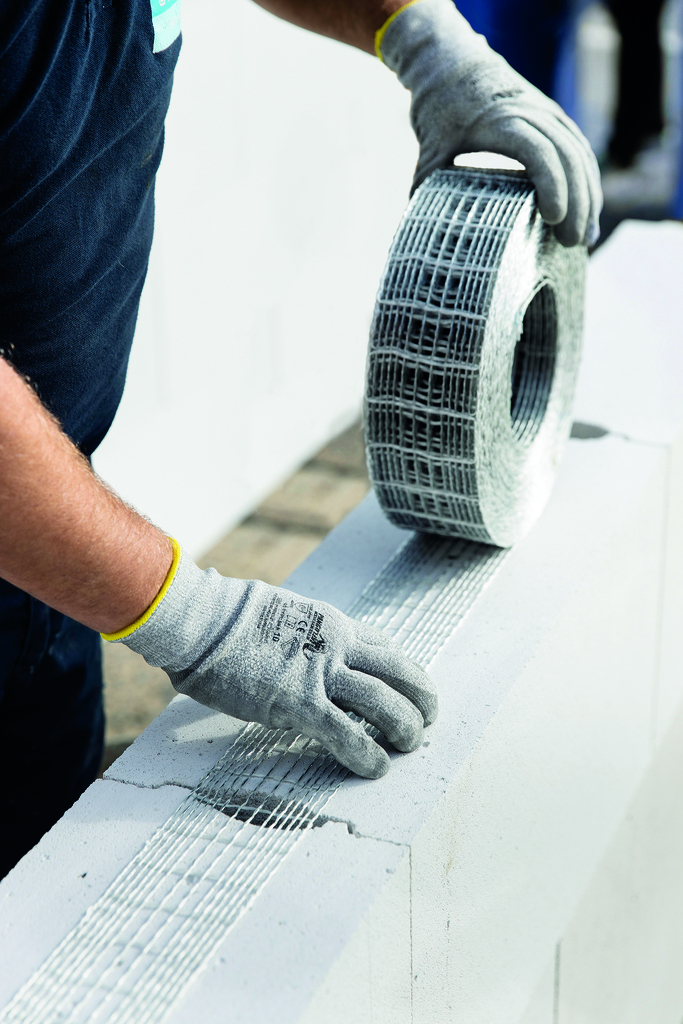
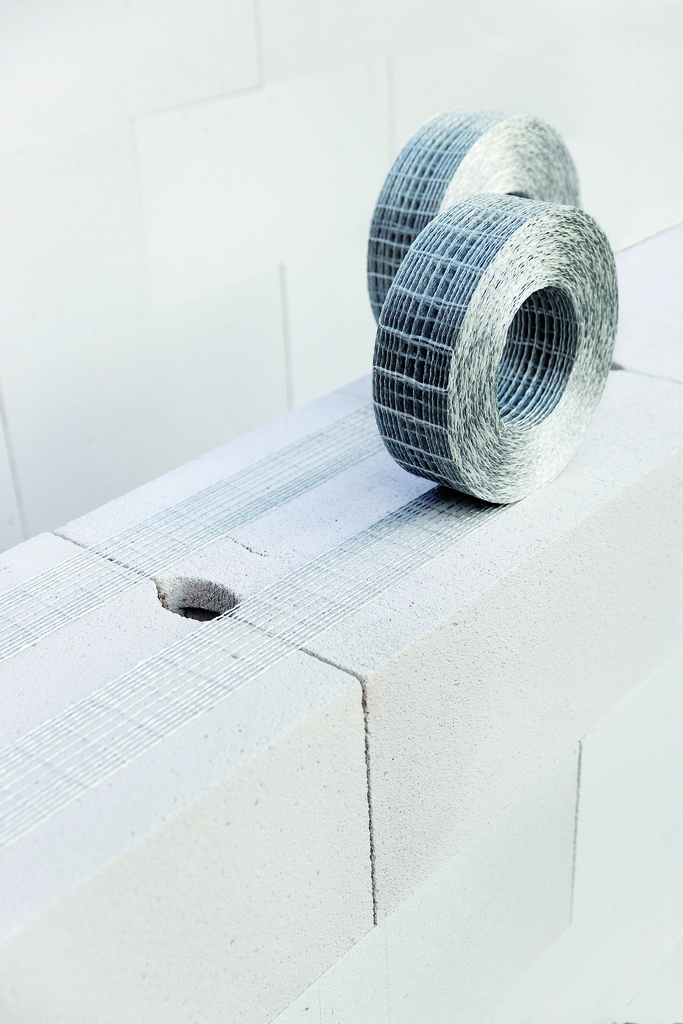
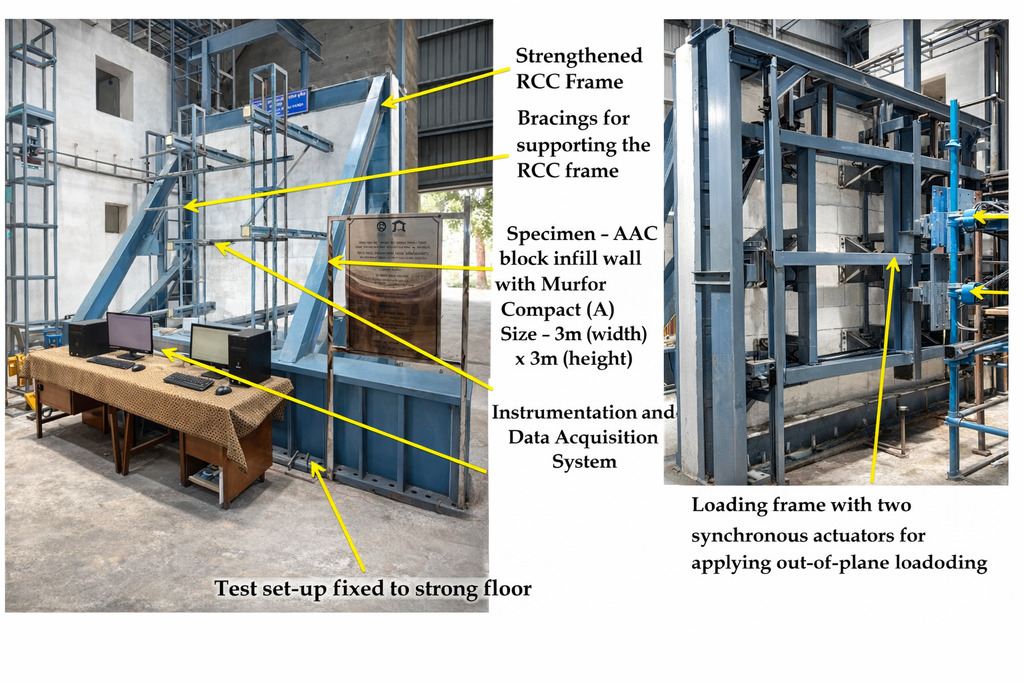
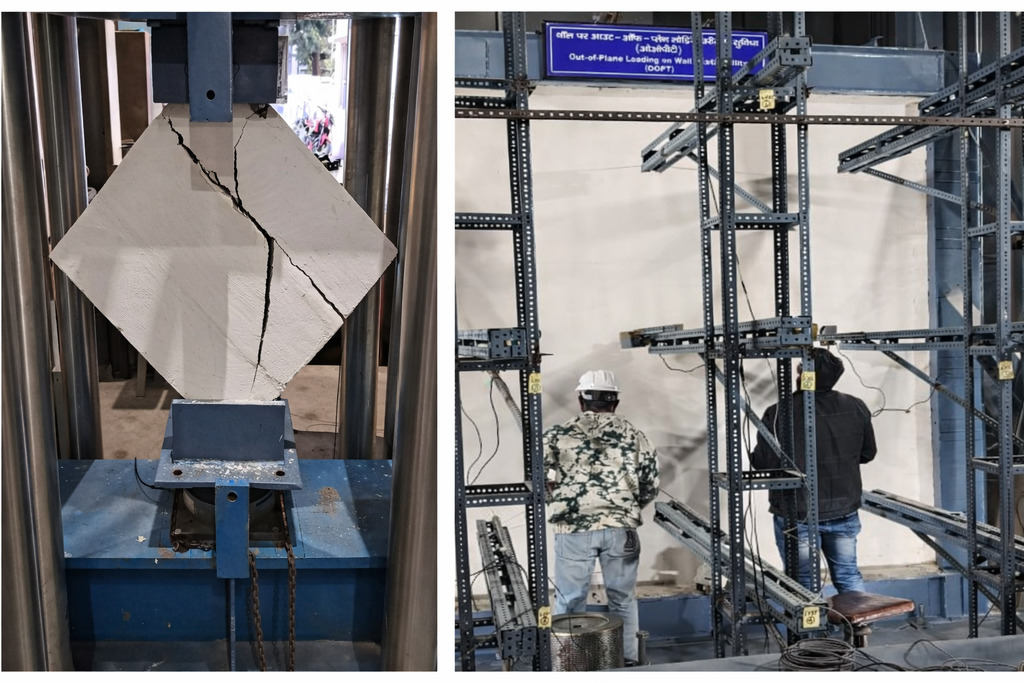
In India CSIR – CBRI recently has completed a detailed structural assessment of Murfor Compact bed joint reinforcement through full-scale testing and design evaluation. CBRI has recommended its use as an alternative to the conventional RCC band system.
MC SMMR is used as bed joint reinforcement in AAC block masonry. It is made from high tensile strength steel that has been galvanised to protect it from corrosion. A minimum of 15 mm cover to the surface of the block is recommended to increase the protection for the steel. SMMR have been used in many projects for many years in Asia and Europe, and have been preforming as expected in the respective applications.
MC SMMR enhances the structural performance of AAC walls by increasing the tensile capacity of the masonry, which significantly increases the in plane and out of plane capacities of the masonry structure.
Depending on width, MC SMMR consists of a series of 7 to 14 longitudinal steel wires with polypropylene yarn longitudinally affixed to each wire. The longitudinal wires and yarns are held together with fibreglass cross fibres at predetermined spacings.
Table 1: Dimensions
Product | Mesh | Width (mm) | Thickness (mm) | Length (m) |
Murfor Compact A-40 | 7 steel cords | 40 | 1.75 | 30 |
Murfor Compact A-80 | 14 steel cords | 80 | 1.75 | 30 |
Table 2: Properties
Product properties | Murfor Compact A-40 | Murfor Compact A-80 |
Yield strength (MPa) | 1770 | 1770 |
Tensile strength (MPa) | 2100 | 2100 |
E-Modulus (GPa) | 180 | 180 |
Design
The MC SMMR longitudinal steel wires are designed as horizontal bed joint reinforcement for flexural tension in the direction of the bed joint reinforcement in masonry walls.
The use of MC SMMR conforms to the guidelines of BIS: 6041 – 1985 Clause 4.6.3.1(b), which states “Incorporating steel reinforcement either in the form of nominal RCC bond beams (see 4.6.4) or horizontal joint reinforcement (see 4.6.5). Horizontal joint reinforcement serves much the same purpose in crack control as RCC bond beams; it increases the tensile resistance to cracking. Due to the generally closer spacing adopted in bed joints, bed joint steel reinforcement may be more effective in crack control than bond beams”.
Benefits
Water-free installation: SMMR does not require any water during installation or curing. There is no water dependency, reducing the strain on water resources and minimizing environmental impact.
Reduced carbon footprint: By eliminating the need for cement and concrete as well as limiting the use of steel, SMMR significantly reduces the carbon footprint associated with traditional RCC bond beam construction. Thus, SMMR ensures a green, eco-friendly building process.
Streamlined construction: With SMMR, the integration of construction projects is seamless. Embedding this reinforcement solution into polymer-modified block joining mortar streamlines the construction process, saving time, resources, and energy.
Quality assurance: SMMR is manufactured adhering to stringent quality standards of European guidelines. MC is ETA certified for structural use, which allows the products to use CE marking and confirms requirements related to SHE protection (Safet, Health and Environment).
Minimal waste generation: The use of traditional RCC bond systems may result in significant material waste during mixing and curing processes. In contrast, Murfor Compact offers a more efficient solution with minimal waste generation. Its precise integration into block joining mortar reduces the likelihood of excess material usage, leading to less waste and lower environmental impact throughout the construction process.
Lean construction practices: SMMR can help to minimize the environmental impact of construction by reducing waste and costs. It enables improved project management and optimization of resource utilization.
Design aspects
SMMR MC is used as a structural bed joint reinforcement to enhance the out-of-plane capacity of masonry walls. It can also replace in-situ RCC bond beams, increasing construction speed while reducing overall labour costs and the time required for building and curing the RCC bond beams. The moment capacity values are derived from calculations in accordance with BS EN 1996 using MasterKey, a masonry design software. The number of MCA layers is determined based on the recommended placement details provided in MasterKey.
Table 3: Laboratory test matrix
S. No. | Dimensions of wall [height (h) × width (w) × thickness (t)] mm | Details of test specimen |
1 | 3000 × 3000 × 100 | Control specimen of 100 mm thick wall, without any reinforcement |
2 | 3000 × 3000 × 100 | With 5 Single layers of bed-joint reinforcement A40 without edge-anchoring |
3 | 3000 × 3000 × 100 | With bed-joint reinforcement A40 with edge-anchoring |
4 | 3000 × 3000 × 100 | With two RCC bands at lintel and sill level |
5 | 3000 × 3000 × 200 | Control specimen of 200 mm thick wall, without any reinforcement |
6 | 3000 × 3000 × 200 | With 5 Single layers of bed-joint reinforcement A80 without edge- anchoring |
7 | 3000 × 3000 × 200 | With 5 Single layers of bed-joint reinforcement A80 with edge- anchoring |
8 | 3000 × 3000 × 200 | With two RCC bands at lintel and sill level |
Table 4: Summary of laboratory test findings
Criteria | Remarks |
Wall Thickness 100 mm and 200 mm | Murfor Compact is effective in crack control, energy dissipation and ductility while placed in requisite numbers in line with the design guideline of minimum steel requirement w.r.t wall thickness. |
Seismic Zone (Low to Moderate) | Murfor Compact is an alternative to RCC Band system. |
Seismic Zone (High) | Murfor Compact improves ductility, but not sufficient as standalone reinforcement. Additional band system may require depending on slenderness factor, position of wall etc. |
Load Capacity Requirement | Murfor Compact may perform as equivalent (±15% to ±20%) to RCC band system depending on construction of masonry and loading requirement. |
Ease of Construction | Murfor Compact easy installed within mortar joints, no extra shuttering or concreting required. |
Failure Mode Control | Murfor Compact prevents sudden cracking, delays collapse, enhances displacement capacity while anchored at the edges. |
Best Use Case | Ductility enhancement, distributed reinforcement, non-seismic or moderate seismic zones, thicker AAC walls. However, the wall needs to be designed with Murfor Compact by a structural consultant/expert in line with Manufacturer’s guidance and codal requirement. |
Specification & methodology
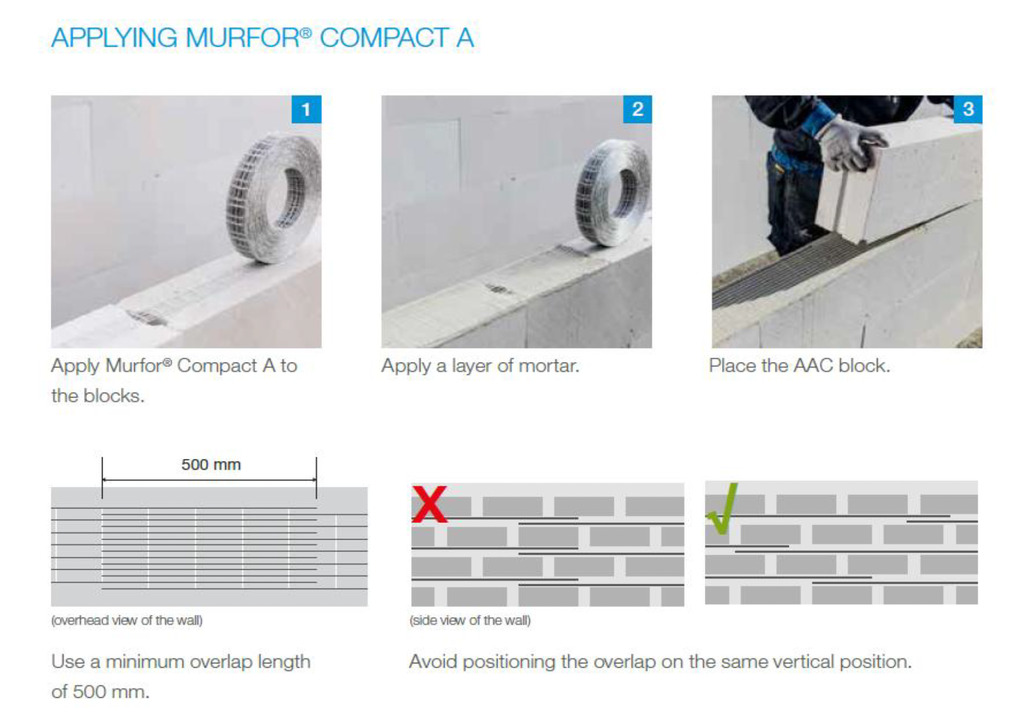
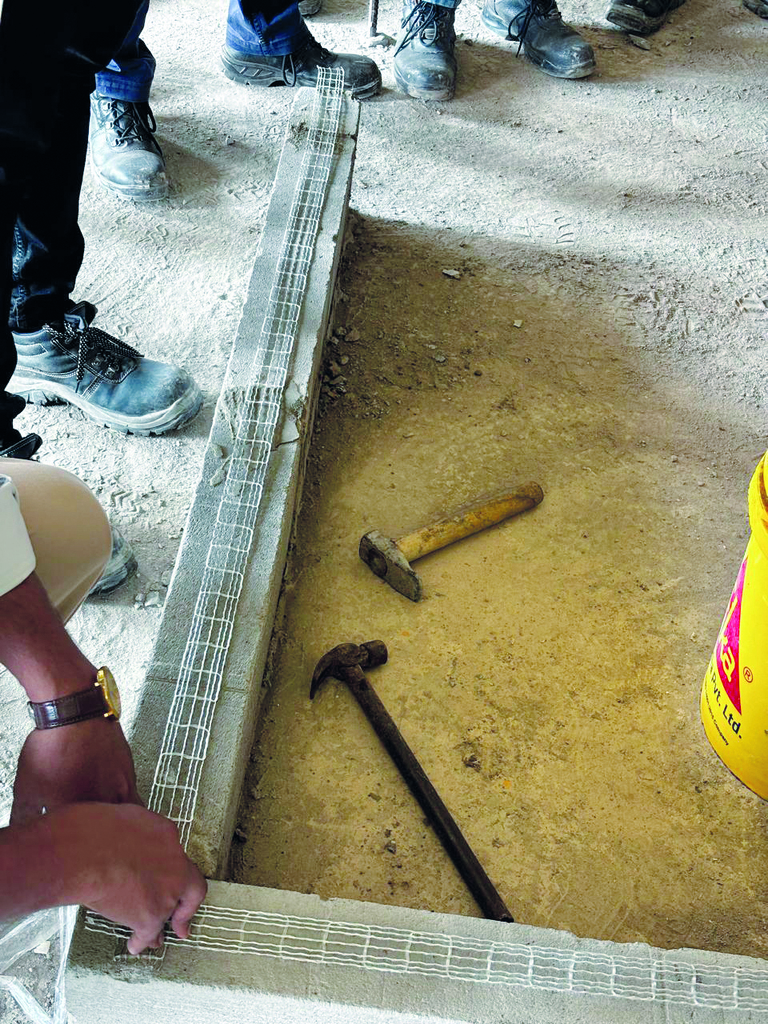
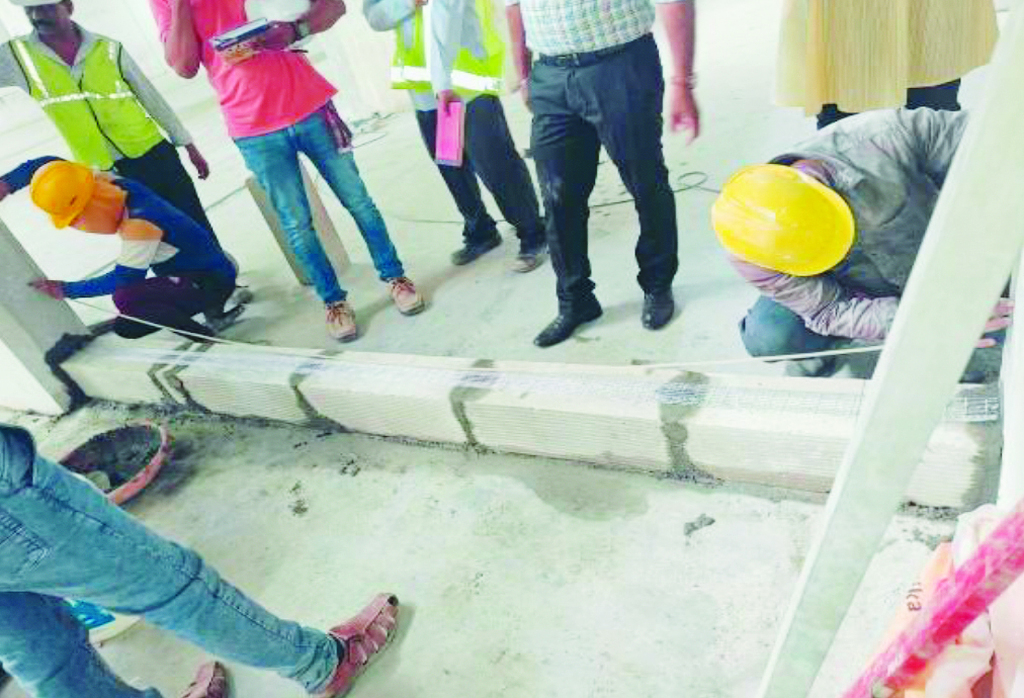
The SMMR shall be embedded in premix AAC block joining mortar (BJM) in 4-5 mm thickness. In case of conventional cement/sand mortar, the joint thickness can be 10-12 mm. The AAC block shall have a minimum compressive strength of 4 N/mm2. The BJM shall have a minimum tensile adhesion strength of 0.4 N/mm2, a split tensile strength of 0.4 N/mm2, and a compressive strength of 7 N/mm2 at 28 days.
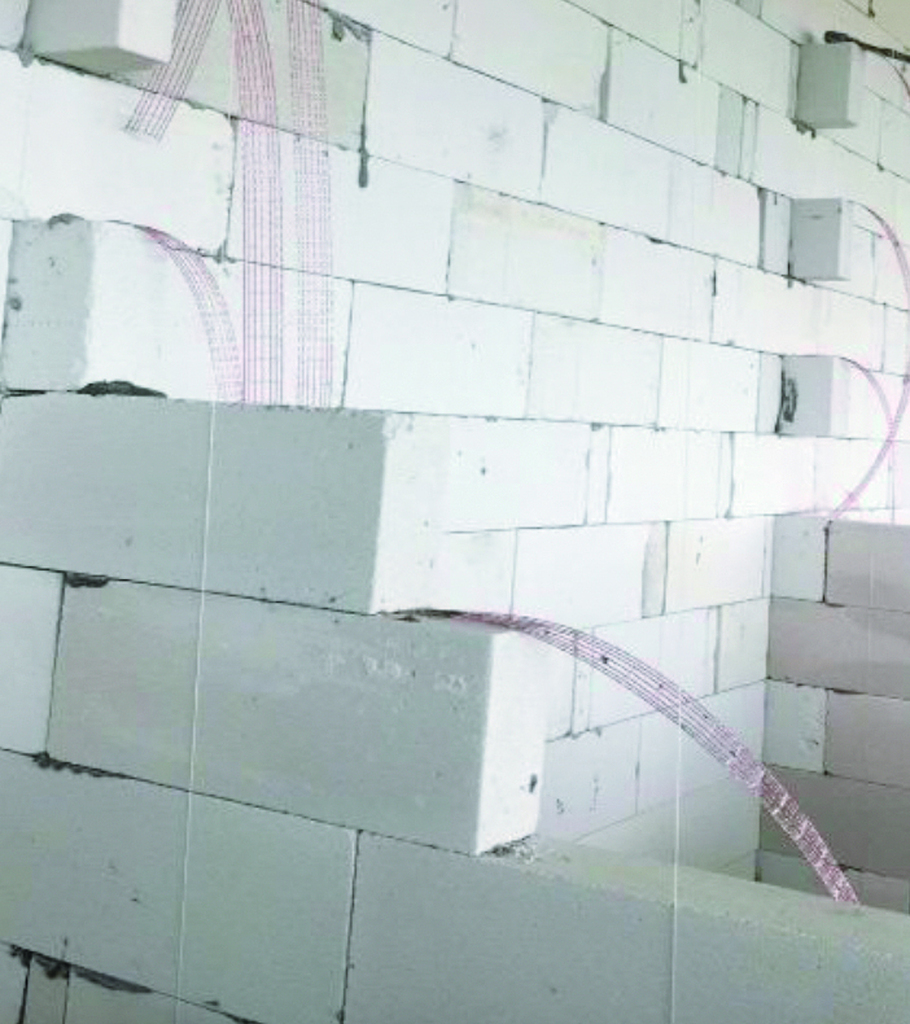
Typically, for a 4 m long and 3 m high AAC block wall (non-load bearing) with a thickness of 100/125 mm, a minimum of 6 layers of SMMR in 40 mm width shall be placed on the AAC blocks. In case of AAC Block thicknesses of 150 mm, a minimum of 4 layers of 80 mm width, and in case of 200 mm AAC blocks, a minimum of 5 layers of SMMR in 80 mm width shall be placed on the AAC blocks. However, depending on specific requirements like lateral load or wind load, wall dimensions, etc., the number of SMMR layers shall vary, which will be designed in line with structural guidelines laid down in BS EN 1996-1-1:2005+A1:2012.
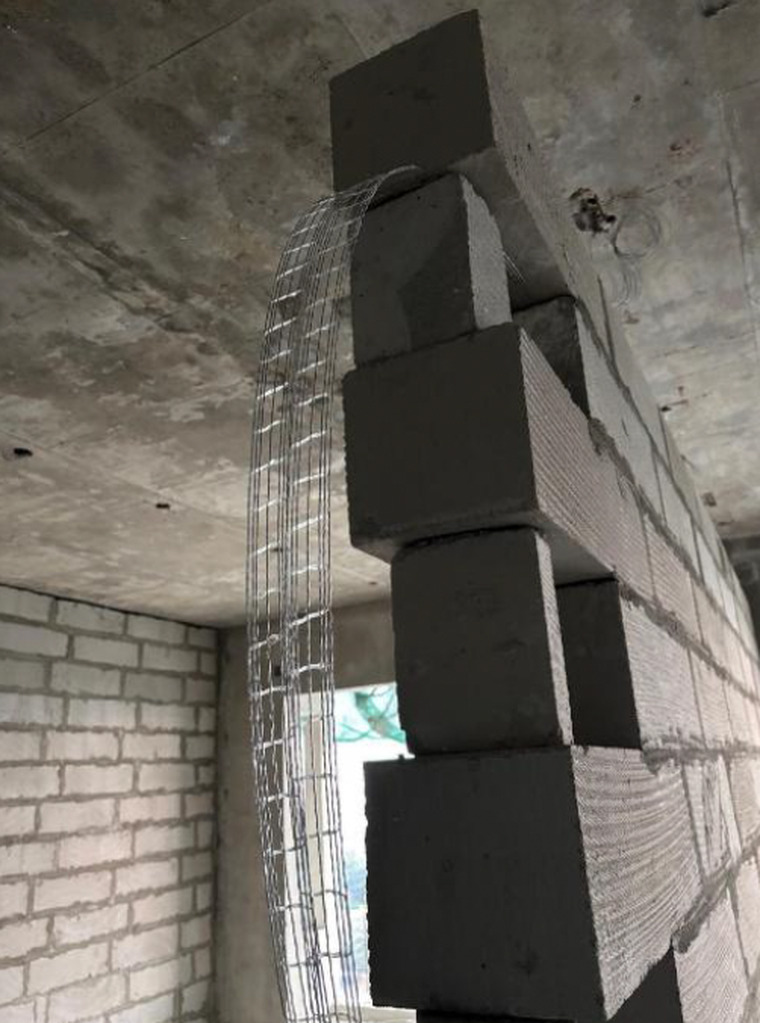
In both the cases of SMMR 40 mm and 80 mm, the first layer shall be placed on the first course of AAC blocks, the second layer shall be placed on the third course of AAC blocks, and the last layer shall be placed below the last AAC block course. The remaining layers shall be equally distributed in the courses of AAC block work. At the edges, the SMMR need to be anchored properly using steel cleat angles with a minimum size of 50 mm x 50 mm x 3 mm, proper nailing, and screwing to be done with the RCC column or RCC mullion or wall as applicable.
All applications shall be carried out as per the manufacturer’s guidelines and the instructions of the responsible engineer.
Conclusion
Using sustainable materials in building construction is crucial due to rapid urbanization, environmental challenges, and resource constraints. With rising urbanization, adopting eco-friendly construction methods and materials is not just a choice, it is a necessity. SMMR has a great potential to address this requirement because of its technical features and application processes.
References
• Bekaert technical manual & data from various online sources
• MasterKey Masonry Design for Murfor Compact Software
• BIS : 6041 & CSIR- CBRI report