News & Markets
Insights from within the supply chain
How Qatar became a market for AAC
Loading...The number that changed the market
For most of the last century, wall block selection in this region was based on compressive strength and price per cubic metre. Thermal performance was a preference, and preferences lose to price.
Qatar Construction Specifications are the governing references for construction work in the country. Section 7 of QCS 2014 adopted the Global Sustainability Assessment System developed by the Gulf Organisation for Research and Development, and, critically, made parts of it mandatory rather than advisory. Energy criteria were among these mandatory requirements. As a consequence of the new framework, construction specifications now included a thermal transmittance target for external walls of 0.57 W/m²K.
A hard U-value target does something that a preference never does. It converts a material property into a pass or fail condition, and it forces a choice between two construction strategies: build a thermally poor wall and add an insulation layer to make up for the difference or build a wall that performs thermally by itself. Dense concrete masonry only offers the first of these two choices. That is the beginning of the story of AAC in Qatar, and all developments discussed in the following are a consequence of this.
Where the market settled on strength classes
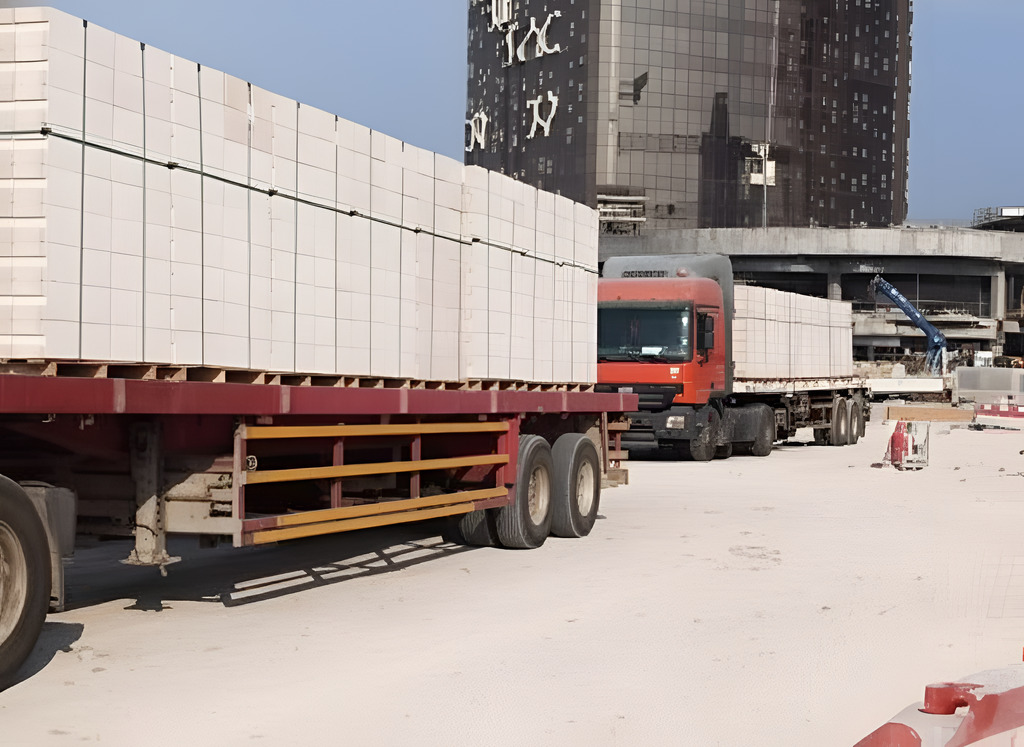
Two EN 771-4 classes dominate construction practice in the region, G2/05 and G4/06. The choice between them was not made by structural engineers, it was driven by the U-value table (Table 1). The ASLAN company mostly supplies products with a dry density of 500 kg/m³ and a thermal conductivity of 0.13 W/m·K, which relates to the bold-highlighted values in the table. At 250 mm, the G2/05 class reaches an U-value of 0.48 W/m²K, which is below the target value. The block meets this requirement by itself, before any render or additional insulation is included.
Table 1: Thermal properties of AAC wall units depending on wall thickness.
Thickness | R (m²K/W) | U-value (W/m²K) |
100 mm | 0.77 | 1.06 |
150 mm | 1.15 | 0.75 |
200 mm | 1.54 | 0.58 |
250 mm | 1.92 | 0.48 |
300 mm | 2.30 | 0.40 |
The commercial consequence of that single, highlighted row in Table 1 is larger than it looks. It does not make the wall marginally better on a specification sheet. It eliminates a construction layer from the project, along with its material cost, its programming requirements, and its fixing details. It also adds durability by eliminating an additional interface that could fail within ten years after construction. Once a contractor understands these advantages, the ‘price per cubic meter argument’ does not work any longer.
At 600 kg/m³ and 0.16 W/m2·K, the class G4/06 relates to roughly 56 percent higher compressive strength and lowers the thermal performance by roughly 20 percent at equal thickness. This class is applied based on strength requirements. In volume applications, non-load-bearing infill and partition walls, the lighter class listed in Table 1 is the preferred choice.
The supply and apply model
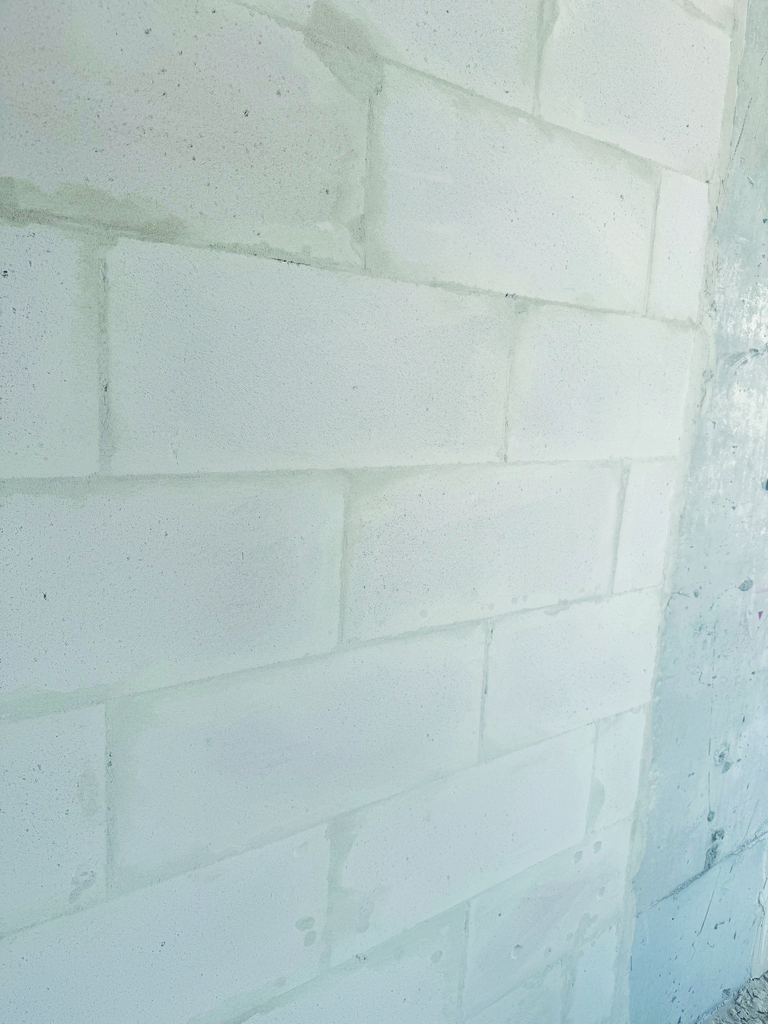
In many markets the producer sells the material, and the main contractor arranges masonry labour. In Qatar, however, a different model took hold. The same company delivers the material and installs it as a single wall package, and that is how the market operated since 2007.
This developed because AAC entered a market whose masonry workforce had spent thirty years working with dense block and thick-bed mortar, and the two require different skills.
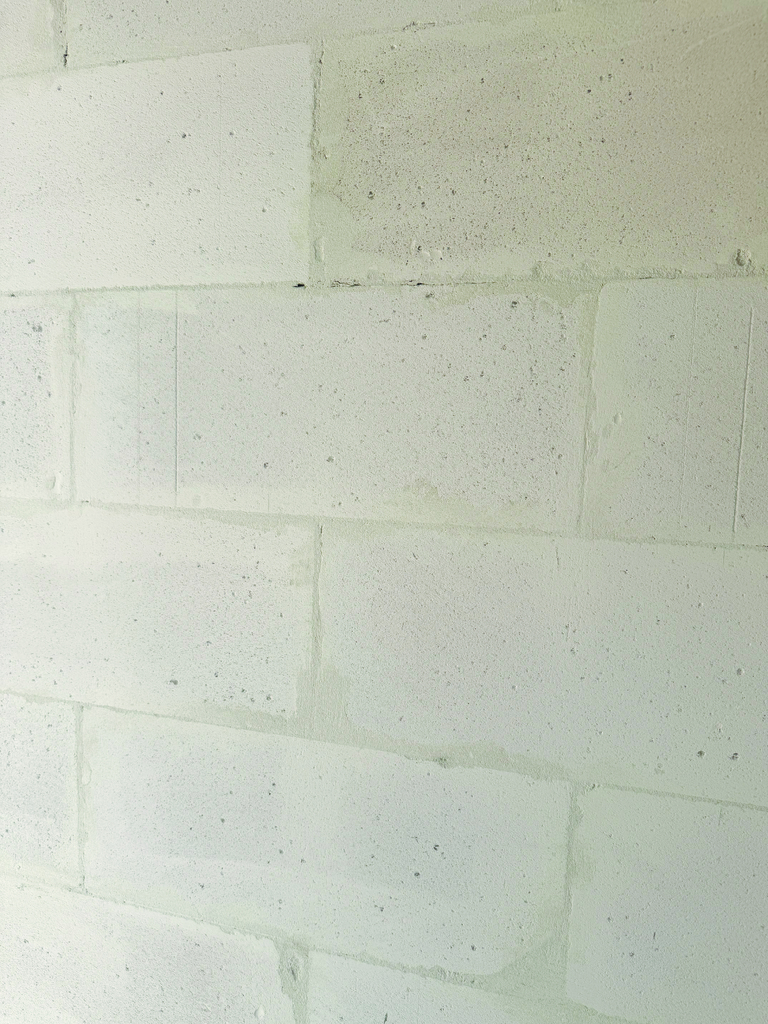
Thin-bed adhesive mortar is less forgiving than conventional bedding. The first course is laid on a semi-dry cement-sand levelling bed, and every course above it inherits any error in that first course. Units can be cut cleanly with a hand saw, which sounds like an advantage - and quietly becomes one - because adjustments begin to be made informally on site rather than being properly set out.
What most contractors here found at the same time was that defect rates in AAC walls tracked the crew far more closely than they tracked the block. A good material laid by a crew trained on dense masonry can produce a wall that underperforms its own data sheet, and the material then takes the blame.
Bundling supply with application solved a commercial problem rather than a technical one: it put the party publishing the performance figures in charge of the workmanship on which those figures depend. For producers in markets where AAC is now arriving for the first time, that is worth considering early. The reputational risk to the material in a new market is almost never the material itself.
What still goes wrong on site
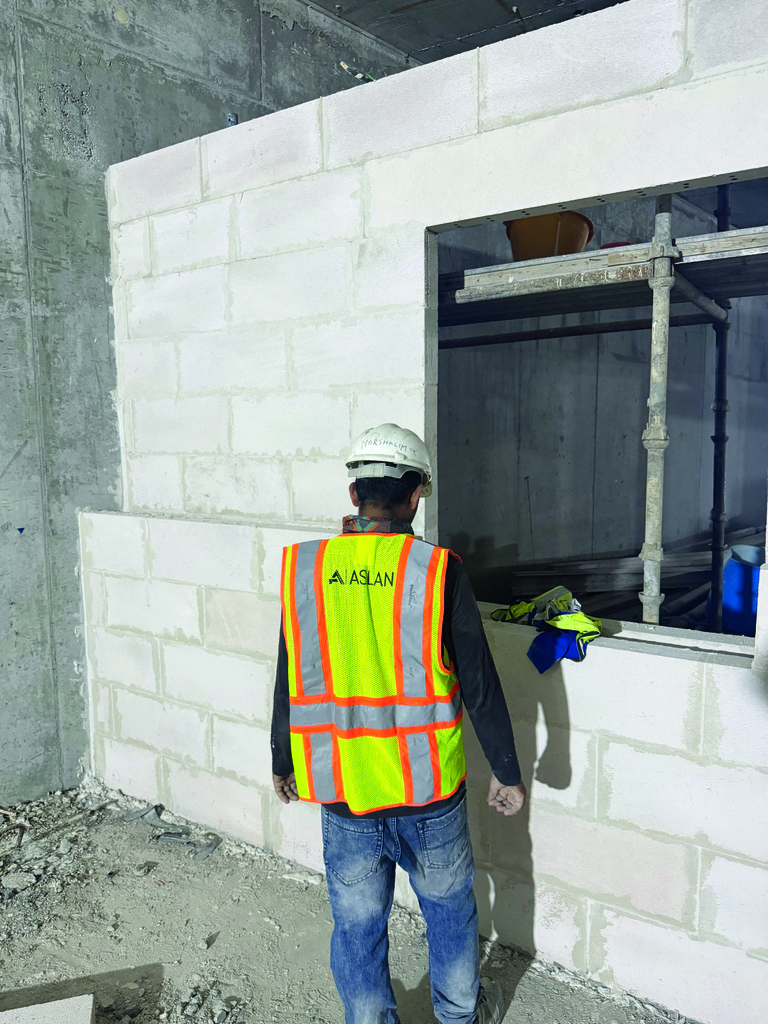
Three problems recur on Qatari projects, and all three are avoidable at the specification stage.
Fixings are the most common and the least excusable. Expansion anchors sized for dense concrete do not behave in the same way in cellular block. This issue arises on nearly every project, usually at fit-out stage, long after the wall has been signed off and often involving a subcontractor who was never informed. The solution is straightforward: specify AAC-rated fixings and communicate the requirement in writing to the fit-out contractor rather than assuming it will be picked up.
Base-course moisture is the second. The cellular structure provides resistance to moisture movement, but the material is porous and will absorb water if left exposed. In the regional climate, the main risk is not rainfall but site water and poor base detailing before the render is applied. A wall that is poorly detailed at its base may not maintain its published U-value, and the resulting repair can be expensive relative to the cost of the wall.
The third is less obvious. Non-bearing panel dimensions are limited, and the permissible span decreases as wall height increases. These limits are published for both fixed-edge and free-edge conditions, while internal partitions have separate limits that vary with building occupancy, with more restrictive requirements for schools and exhibition spaces than for offices or flats. None of this is unusual. It simply needs to be considered before the layout is finalised rather than afterwards, which is often overlooked on fast-track projects.
Where the potential actually sits
Blocks were the entry point for the AAC market. However, they are not where its growth will come from next, and the reason matters to producers elsewhere.
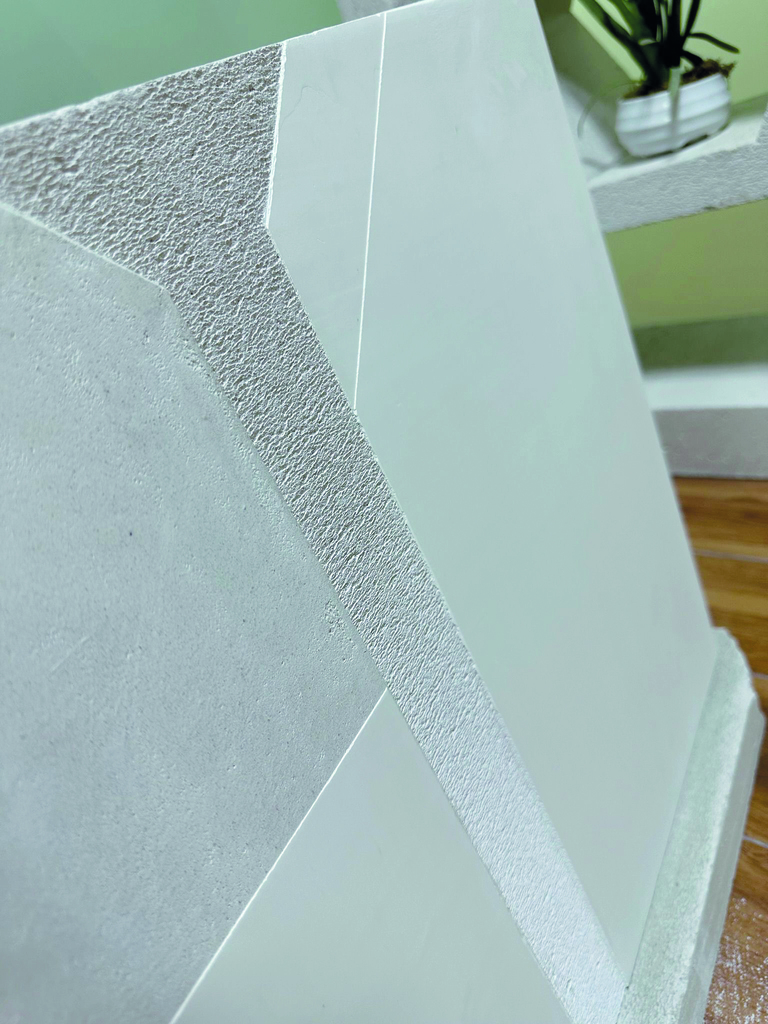
What is expanding now is the rest of the AAC family: reinforced wall panels, floor and roof slabs, and lintels. The logic is the same as the one that won the argument for blocks, extended one step further. The block earned its place by removing a construction layer. The panel earns its place by removing site operations, and in a market where programme restrictions are the binding constraint rather than material cost, that is the more valuable saving of the two.
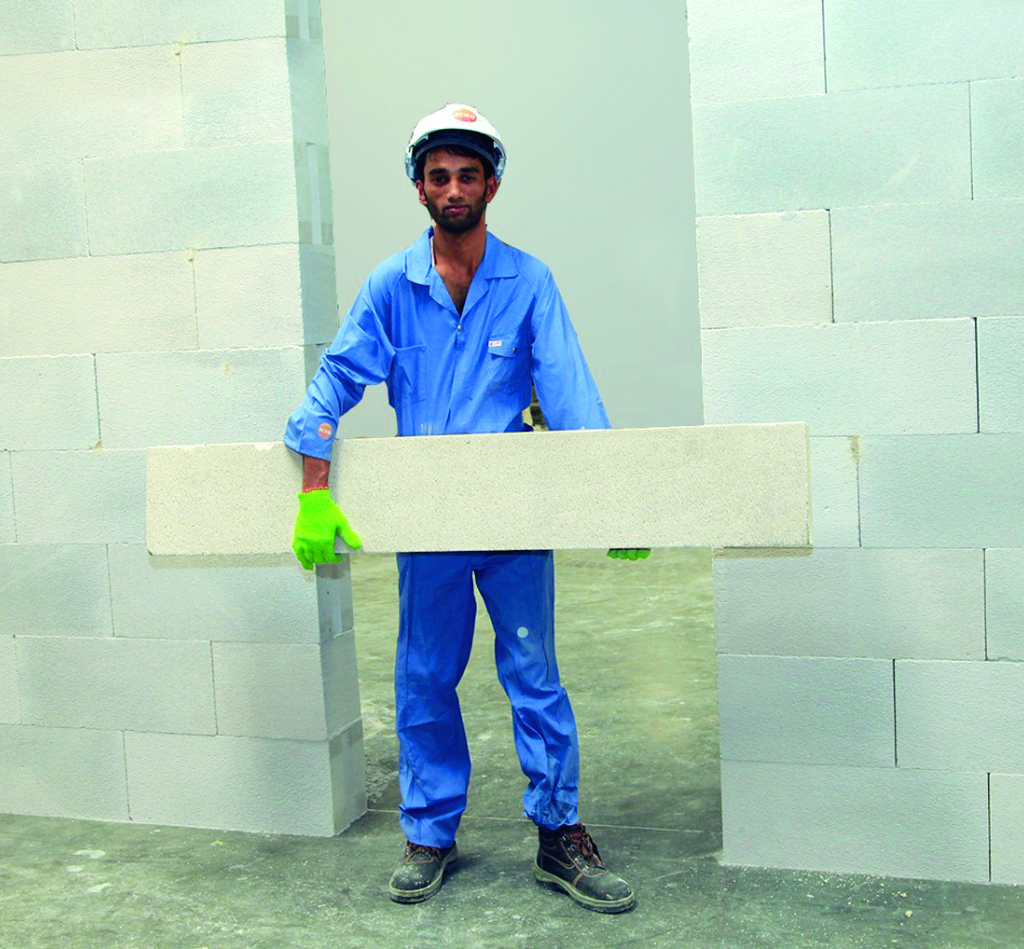
The constraint on that growth is worth stating plainly: it is not demand, and it is not the code. It is installation capability. This market can currently absorb more AAC than it can install well, and every producer who has entered a market at this stage will recognise the risk that follows: volume arrives faster than competence, early failures are attributed to the material, and the material spends the next five years recovering from workmanship it never controlled.
The Qatari experience offers a clear lesson: the specification battle is winnable and, where a code exists, it is largely won for you. The installation battle is not, and it determines how the material is perceived and remembered.
There is also a supply-chain consideration that shapes the opportunity more than any specification argument. AAC is low-density and high-volume, making it disproportionately expensive to transport relative to its value. Regional supply is therefore not a preference; it is arithmetic. Every kilometre between the autoclave and the site is paid for twice: once in freight and once in lead time on a programme with no slack. Wherever a code of this kind appears, producers positioned within the freight radius capture the shift, while those outside it watch the shift happen.
What travelled, and what did not
The part of the Qatari experience that generalises is the mechanism. AAC did not win this market on its merits as a material alone. It won when a regulator turned a material property into a compliance condition, and the industry recalculated.
The part that does not generalise is the speed. A market of this size, with a construction programme this compressed and a specification framework this centralised, changes faster than most. Producers watching similar codes emerge elsewhere should expect the same direction, but a slower pace.
For anyone entering a market at such a moment, the specification argument will largely be won by the code. The one still to be won is on site: in the first course, in the fixings, and at the base of the wall. That is where the material’s reputation is decided, often by people who have never read the data sheet.

Eng. Qasem Al Hariri, Technical Engineer, ASLAN Contracting & Transportation, Doha, Qatar
About ASLAN
ASLAN Contracting & Transportation in Doha, Qatar, is a supplier and applicator of autoclaved aerated concrete blocks, panels and building materials, established in 2007. The company works to a supply and apply model, delivering the material and installing it as a single wall package rather than selling it and leaving the masonry to others, which is now the prevailing arrangement on Qatari projects and the subject of one section of this article. Its wall packages cover residential, commercial and industrial developments across Qatar, including Place Vendôme in Lusail and towers at The Pearl.