Production Technology
PMX Labs Sp. z o.o., Poznan, Poland
Compressive strength testing beyond the norms – practical view
Loading...Quality control of the production process
As AAC technology consultants, PMX Labs experts made collectively visits to over 100 factories around the world. Some observations and know-how will be shared.
The basis for evaluation the white cake is compressive strength, as it is the most variable and reported value. There are major steps impacting end results:
I. Block collection
II. Samples cutting
III. Samples moisture conditioning
IV. Compressive strength test
It is important to note that majority testing is done for compliance reasons. AAC plants need to check if their products meet the minimum requirements in their declarations. This is often made on pass/fail basis and higher variance of results is allowed. The other type of testing is for purpose of optimization of recipes and processes. In this case eliminating testing method variance is key to capturing effects of recipe changes on the compressive strength.
Block collection for testing
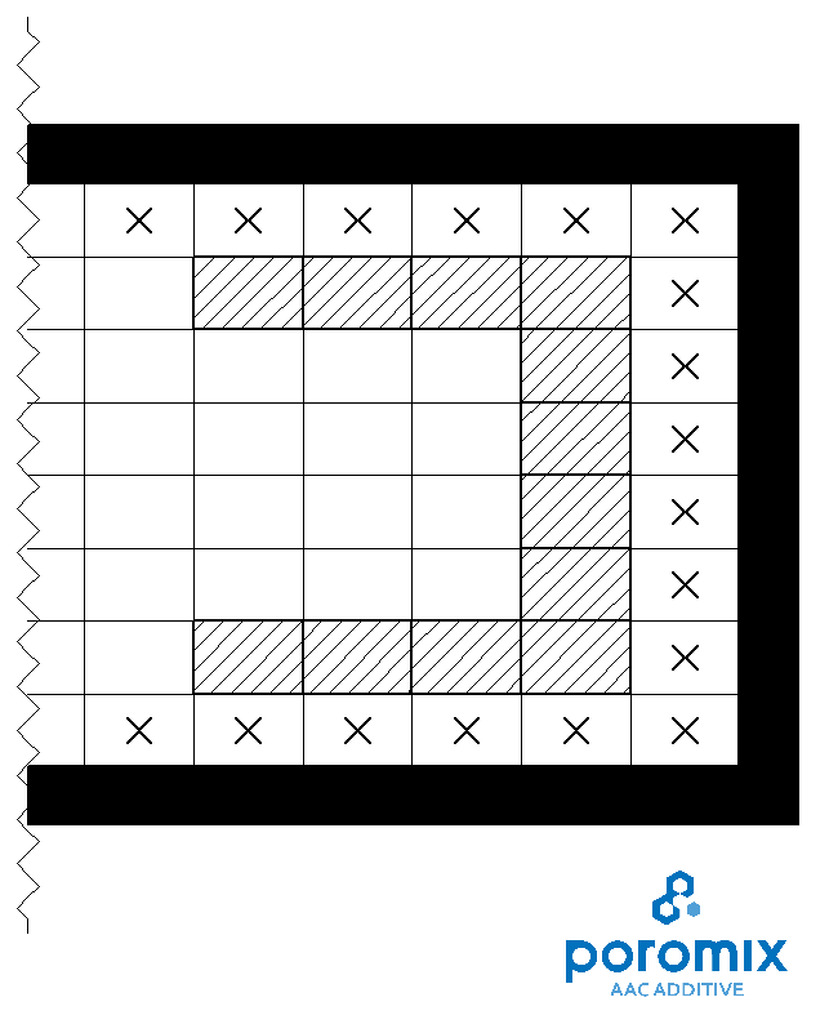
The norms do not specify which blocks should be collected for testing. In many AAC plants around the world the packing line operator decides which block is collected, randomizing the result. With know-how of the process, it is clear that position in the cake impacts the compressive strength result, as not all blocks have identical parameters. Even though not specified in the norm, PMX Labs recommends implementing a standardized way of collecting blocks from the mould for testing. It is good practice to always take the block from the same place – then over time this can bring trust in the results, as one variable – location of the block within the cake – is eliminated. One tip to offer: the sample should never be collected from the external rows or corners. (Fig. 1) External blocks have contact with a mould side, and the energy of the green cake is transferred to this metal part. Ambient temperature or mould temperature will impact the results, becoming another variable in the test method.
Once the blocks for testing are collected from the packing line, further tests can be performed in the plant laboratory.
Cutting schemes and cube preparation
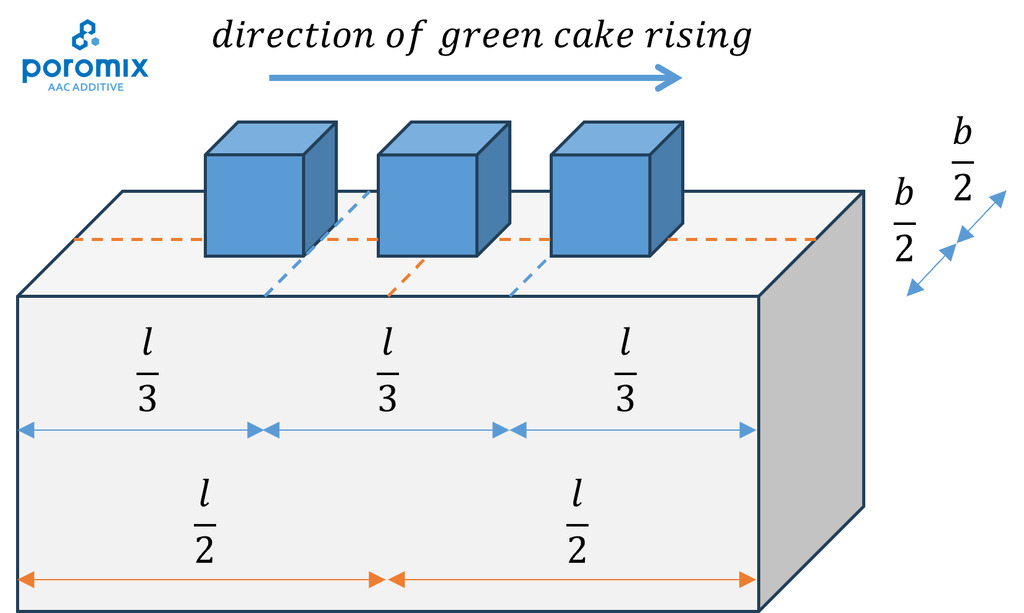
For density and compressive strength tests the specimens are taken from every block tried. Cubes are evenly distributed along the block (Fig. 2). This representative value also considers the influence of the rising height. This is a known phenomenon that the compressive strength in the rising direction is 10–15% lower than that measured in the perpendicular direction [3].
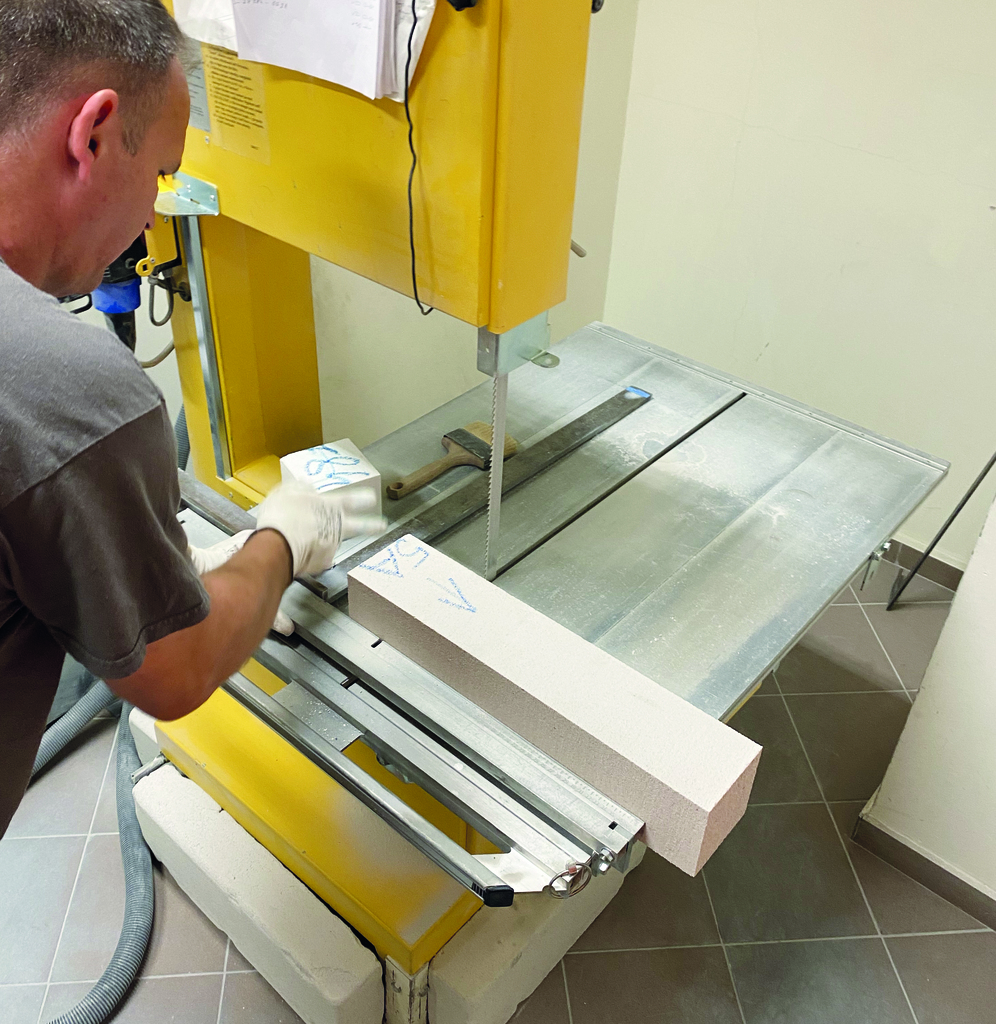
The surfaces of cubes should be flat and parallel, allowing high compressive strength. Crucial parts of the band saw to monitor are the cutting belt and bearings. They affect the quality of cutting surface and must be maintained regularly. In extreme situations changing a band saw blade can improve plants compressive strength results. Often operators are delegated for cube cutting and are not always aware of importance of doing it in a repeatable and correct way. Providing a training and standardized procedure for cutting cubes is a sure way to eliminate variance in compressive strength testing.
Once the samples are cut to 100mm cubes their surfaces and parallelism of planes should be checked or prepared. In the most advanced technologically AAC plants, the surfaces of the cubes are milled for perfect flatness and perfect parallelism of the surfaces. A dedicated milling machine is used for that. Most plants, however, do not use such machine and allow for the test results to have higher variance due to cube preparation quality. In this case it is possible that poor compressive strength results are caused by poor sample preparation. Quality Manager must be aware of that.
Moisture content
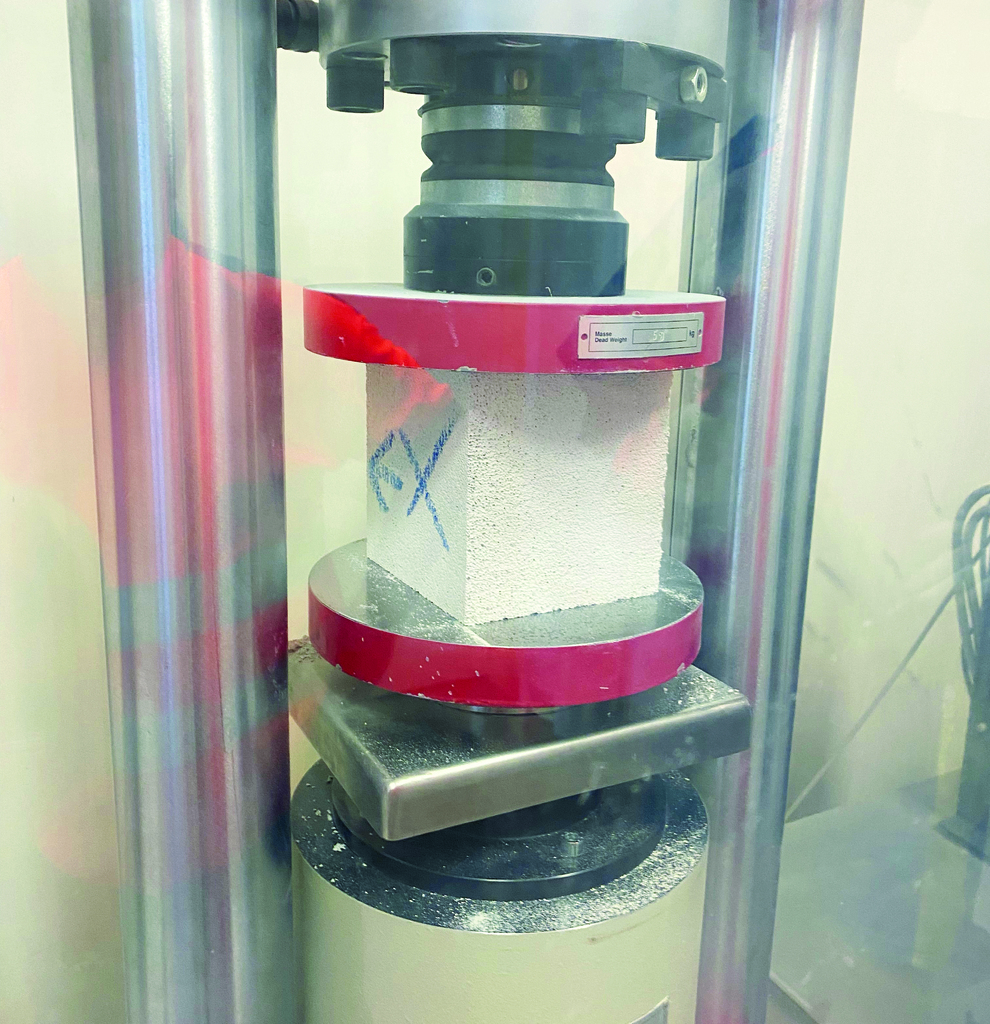
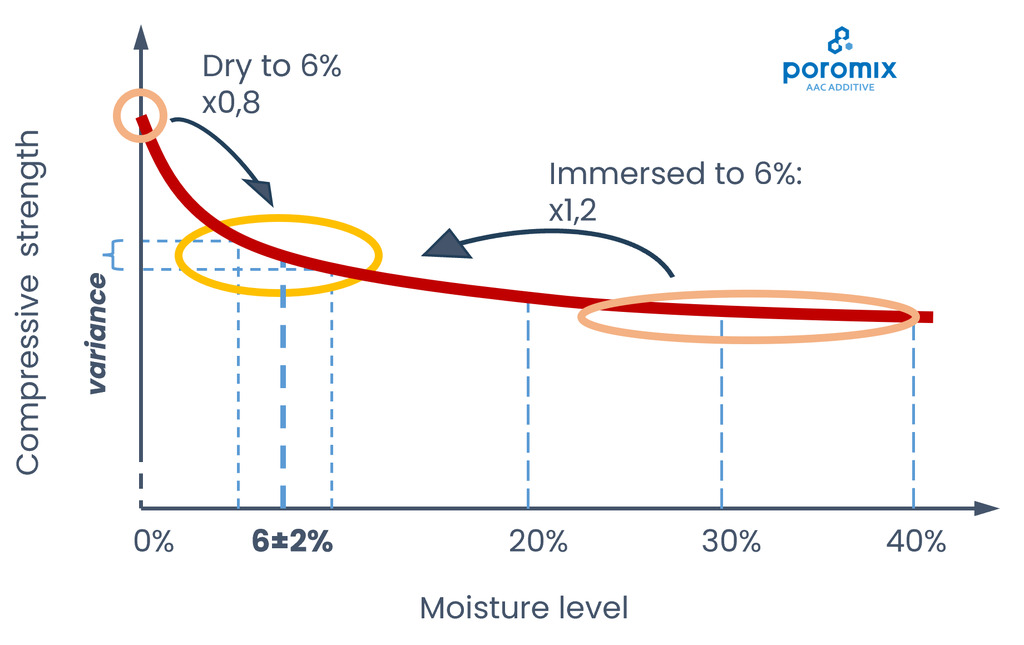
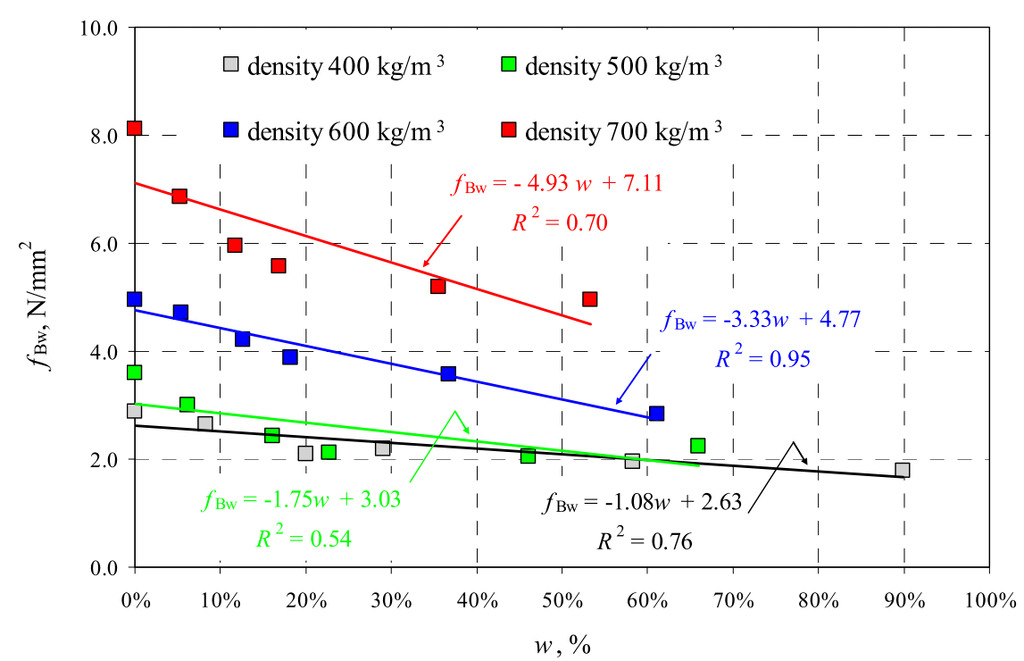
The AAC reaction ends in the autoclave; therefore, the density and compressive strength are defined at this stage. The only parameter that changes afterwards, which influences compressive strength, is moisture of the product. Reduction of water level results in increase of compressive strength, up to the maximum value measured at 0% moisture, which is visualized in Figure 5 and 6. With that in mind, discussing a compressive strength value without mentioning moisture does not bring any value.
To provide equal and repetitive conditions for measuring compressive strength, samples must be conditioned. European Norm [2] specifies four types of conditioning depending on the required moisture state of the specimens:
1. Air-dry
2. Oven-dry to 0% moisture
3. 6% moisture
4. Immersion
With the right drying method, moisture can be one variable less to control.
1. Air-dry
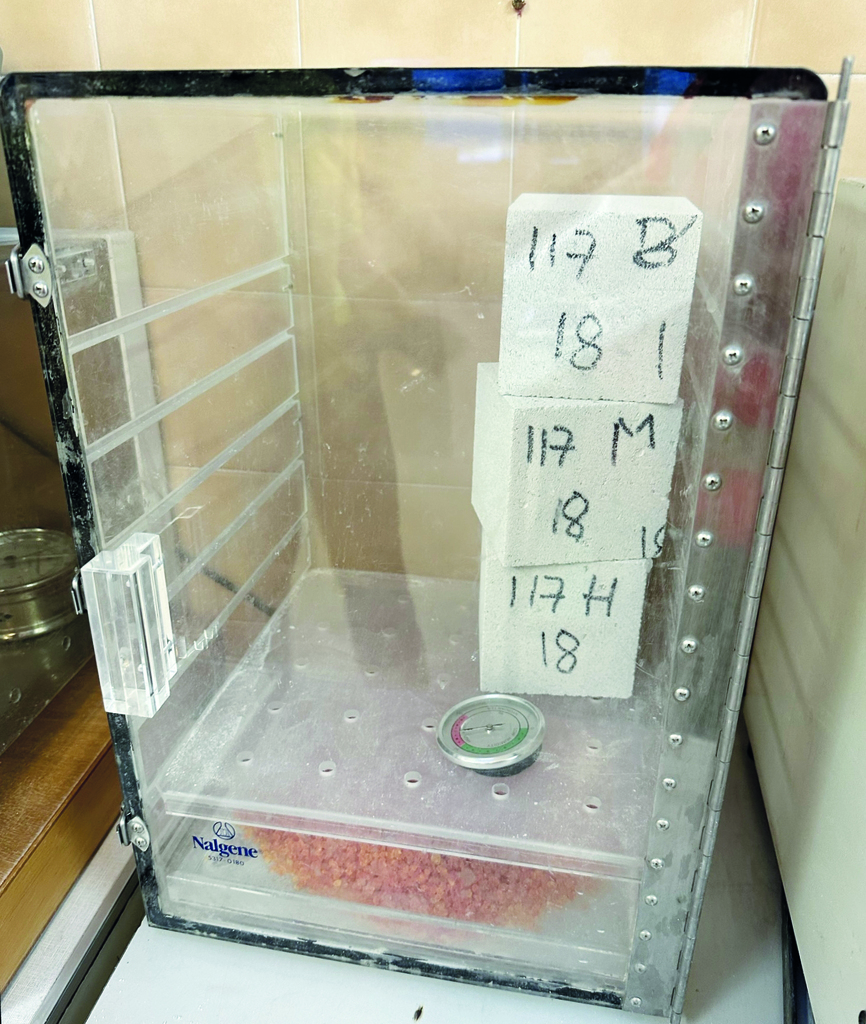
Specimens may either be stored for at least 14 days under laboratory conditions with a temperature above 15 °C and relative humidity below 65 %, or, alternatively, dried at 105 ± 5 °C for at least 24 h and subsequently cooled at room temperature for a minimum of 4h.
The first variant is rarely used in a laboratory, as the results take long time to get. However, using the oven at 105 ± 5 °C is quite common, as it produced the results fast.
2. Oven-dry to 0% moisture
Specimens are dried either at 105 ± 5 °C to constant mass or at 70 ± 5 °C to constant mass, followed, in the latter case, by storage at 20 ± 2 °C until thermal equilibrium is reached. Compression test must be performed within 24 hours.
From practice it is known that drying to constant mass can take 3-5 days in the oven, which is quite long.
This is occasionally used, but in PMX Labs opinion it is the best solution for optimization tests, because the moisture can be eliminated as a variable in testing. If compressive strength is checked on cubes at 0% moisture a coefficient of 0.8 is needed to standardize the strength to the declared 6% moisture level, as shown in the next section.
3. Oven-dry to 6% moisture
Drying the specimens at a temperature not exceeding 50 °C until a moisture content of 6 % of the dry mass is attained, with an allowable deviation of ±0.2 % of the dry mass, follow storage at room temperature for at least 5 hours.
This way is popular among laboratories too. The clear disadvantage is variance in strength between 4% and 8% of moisture, as this method allows for such range. That means there is a variance of results fully explainable by moisture conditioning. During the drying process the weight must be checked to make sure the specimen has the right moisture content.
4. Immersion in water
Immersion in water at 20 ± 5 °C for at least 15 h, then allowing to drain for 15–20 min.
Its advantage is not using an oven. This one is not used often by AAC plants.
Moisture-condition coefficient
For the normalized compressive strength, the Norm [2] applies to a moisture-condition coefficient. The values are:
· air-dry: ηw = 1.0
· 6% moisture content: ηw = 1.0
· oven-dry: ηw = 0.8
· immersed: ηw = 1.2
Drying
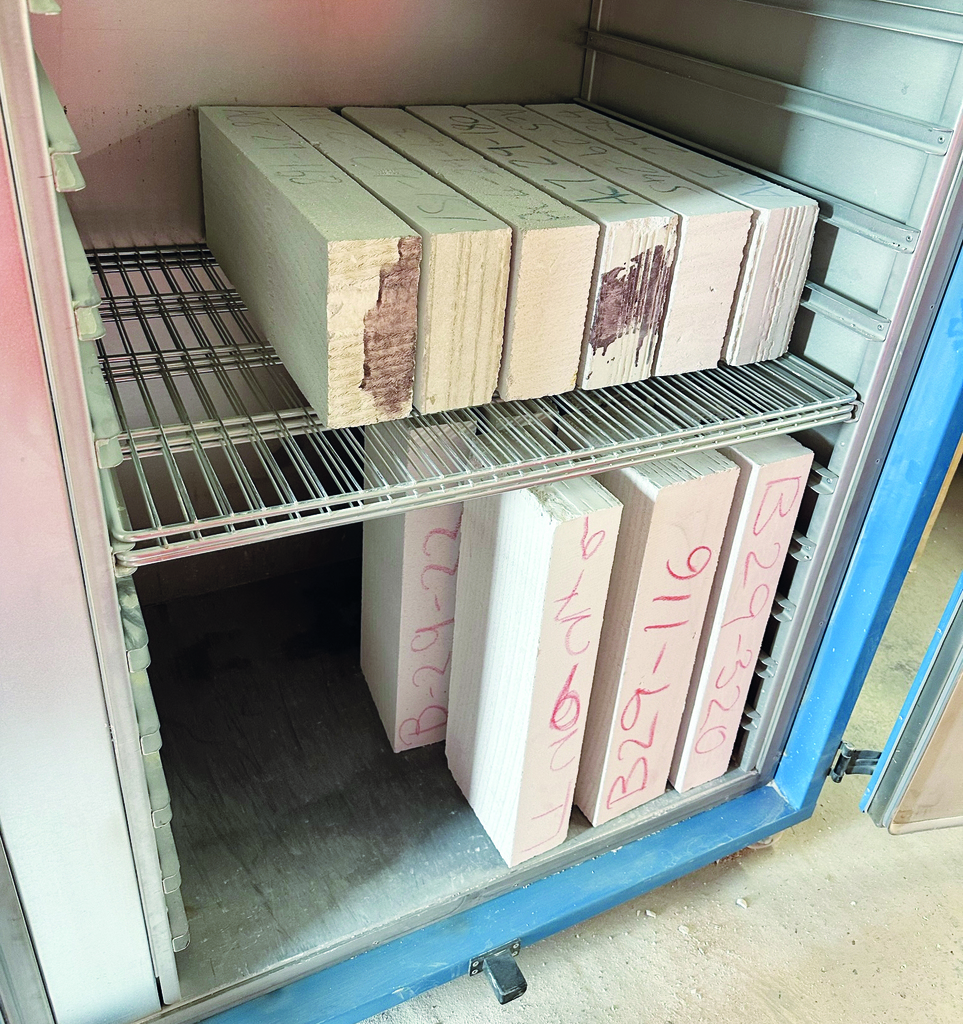
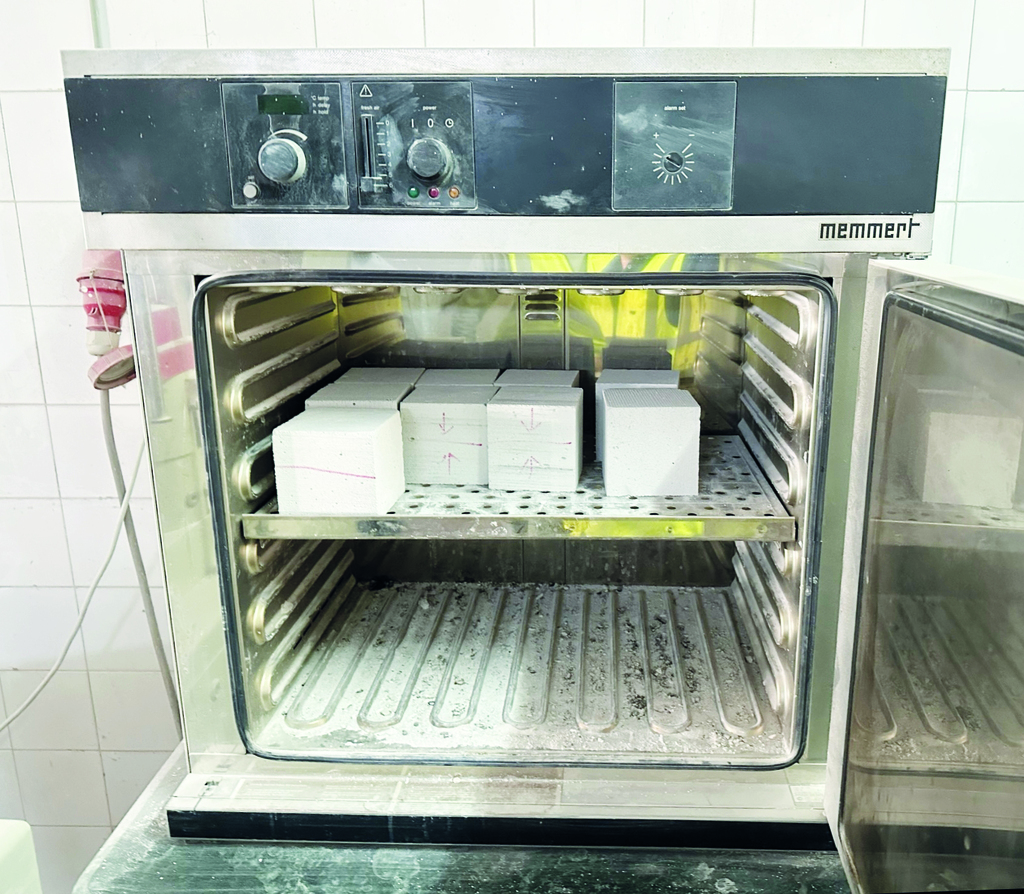
For all drying procedures, except where otherwise specified, free circulation of air around the specimens shall be ensured. Constant mass is considered to have been achieved when the difference between two successive weighing, performed at intervals of at least 24 h, is less than 0.2 % of the specimen mass [2]
Summary
Quality control management is a crucial part of operating an AAC plant, ensuring the resources are used efficiently. PMX experts strongly believe that if a measurement is worth doing, it is worth being done well. Serious production decisions are made based on the compressive strength results, and that is why PMX Labs recommends strict protocols in this topic. Following methods presented [1, 2] and the recommendations of industry best practices allows AAC plants to understand better where they are with production and lays foundation for optimization of the recipes and processes.
In AAC production managers deal with hundreds of variables on daily basis. The more of them can be reduced, mastered and understood, the more control we have over production, quality and cost of the end-product. This article presented some practical insights into how to achieve it. Simpe ideas like precise cutting of the samples, strict control of water level in the specimen, proper surfaces, data collection and deep analysis are worth bringing to any AAC laboratory.
Sources
[1] EN 771–4:2011+A1:2015
[2] EN 772-1:2011+A1:2015
[3] Autoclaved aerated concrete masonry for energy efficient buildings: State of the art and future developments – E. Michelini, D. Ferretti, L. Miccoli, F. Parisi; Construction and Building Materials 402 (2023) 132996
[4] Features of non-destructive testing of existing masonry structures made of autoclaved aerated concrete units - R. Jasiński, Ł. Drobiec, W. Mazur, Cement Wapno Beton, 27(3) (2022), 178-197