Science & Innovation
AAC Recycling
Utilization of AAC powder and granulate for gypsum based building materials
Loading...



AAC waste is generated during production, construction and post-demolition. Especially, the volume of post-demolition AAC is expected to increases over the next decades [1]. Closed-Loop recycling for the production of new AAC has been limited to a certain amount depending on the unit density class [2, 3]. Addition of up to 15 M-% AAC powder (0-1 mm) is reported to be feasible for the production of AAC density class 550 kg/m³ [2]. Other recycling options include the production of lightweight aggregate concrete, light mortar, floor screed or gypsum-based building materials [4, 5] as well as recyclable foam stone blocks made from coarse AAC-granules [6]. The utilization of AAC powder and granulate for gypsum-based building materials is a relatively new field of research and so far, a good compatibility between AAC particles and the gypsum matrix has been reported for substitution ratios of up to 30 M-% [5]. Recently, the research projects “Gipsgebundene Bauplatten aus feinem Rezyklat-Porenbeton-Brechsand” and “Untersuchungen zum Einsatz von Porenbeton-Brechsanden in Gipsbauprodukten - Ausfachfüllung bei Stahlleichtbaurahmen und Gips-Putz” have been funded by the German Federal Institute for Research on Building, Urban Affairs and Spatial Development and the Federal Ministry of Research, Technology and Space. These two projects outline the processing of AAC construction and demolition waste into a lightweight aggregate, which can be used for lightweight gypsum based building plaster [7] gypsum wall panels or gypsum-based self-levelling mortar for steel-framed wall systems. In conclusion, these studies demonstrate that AAC can be utilized as a sustainable and cost-effective lightweight aggregate for gypsum-based building materials.
AAC powder and granulate
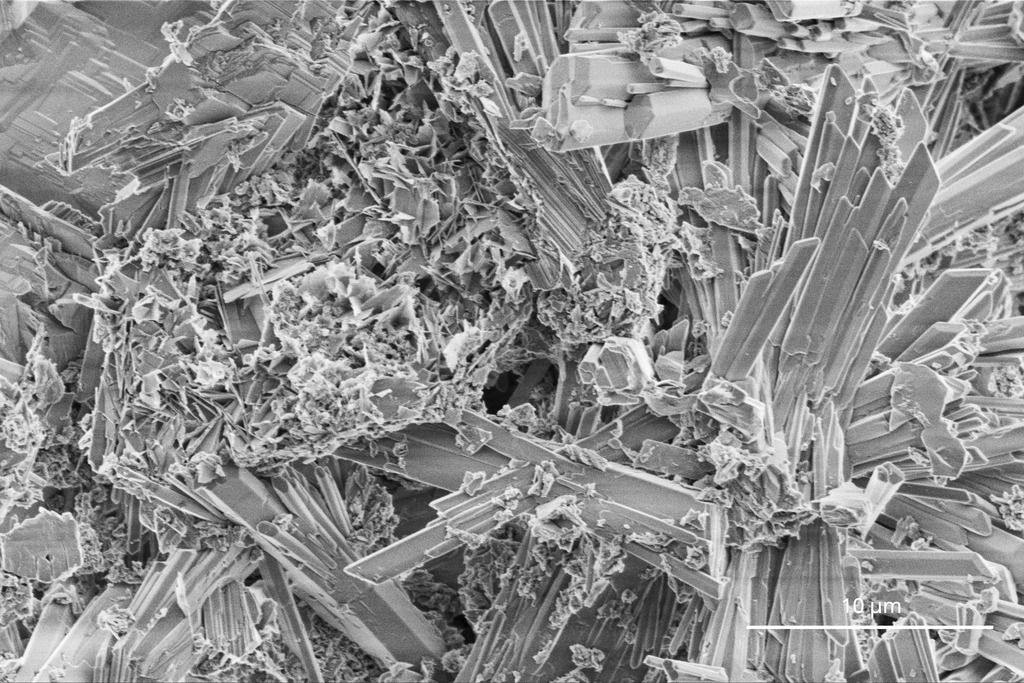
AAC construction and demolition waste of various density class and age were investigated. The compressive strength was determined from small cubic specimen (30-50 mm) after drying at 105°C. The bulk density of the crystallite matrix was determined by combining the air porosity quantified by micro-CT and the skeletal density determined by helium pycnometry. It was additionally determined from the water absorption of the AAC powder after water saturation for at least 24 h and vacuum filtration at < 0.1 bar for 30 min [9]. The bulk density of the loose powder or granulate was determined by the shovelling procedure without compaction [8].
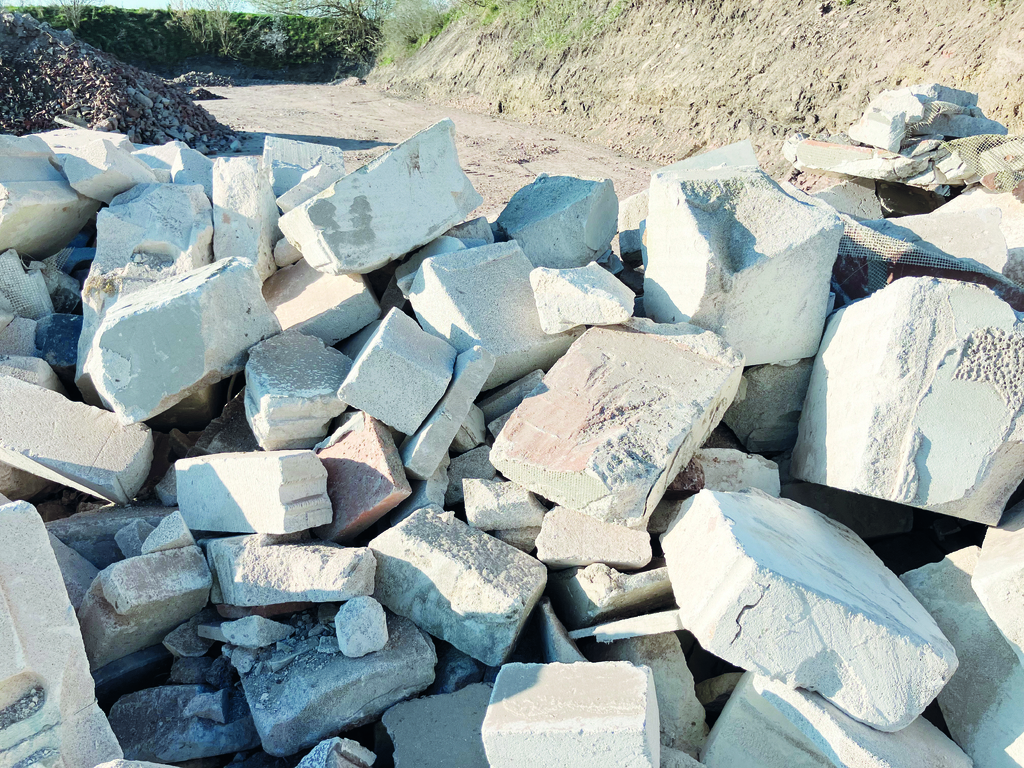
Several methods for size reduction were investigated. The suitability of each method depends on the desired particle size distribution. A coarse granulate was obtained by a jaw crusher or single-shaft shredder. A fine powder was obtained by a screen ball mill, a disc mill or the “ecopulser”, a novel size reduction technology based on shock waves. After size reduction to less than 1 mm – such as for lightweight gypsum-based building plaster – most of the air porosity is lost. The easiest parameter to collect for quality control is the powder bulk density, which correlates with the density of the AAC crystallite matrix. The lowest density class exhibits the most porous crystallite matrix and yields a lightweight powder with a bulk density below 500 kg/m³ (Table 1). Even older AAC with higher density classes yields a sufficiently lightweight powder, as the density of the crystallite matrix is only slightly higher. The same applies to coarsely crushed AAC granulate < 4 mm (Table 2) used in gypsum-based self-levelling mortar, except that more air porosity is retained. However, if AAC waste is contaminated with high density aggregate like concrete or brick, the powder bulk density may increase too much.
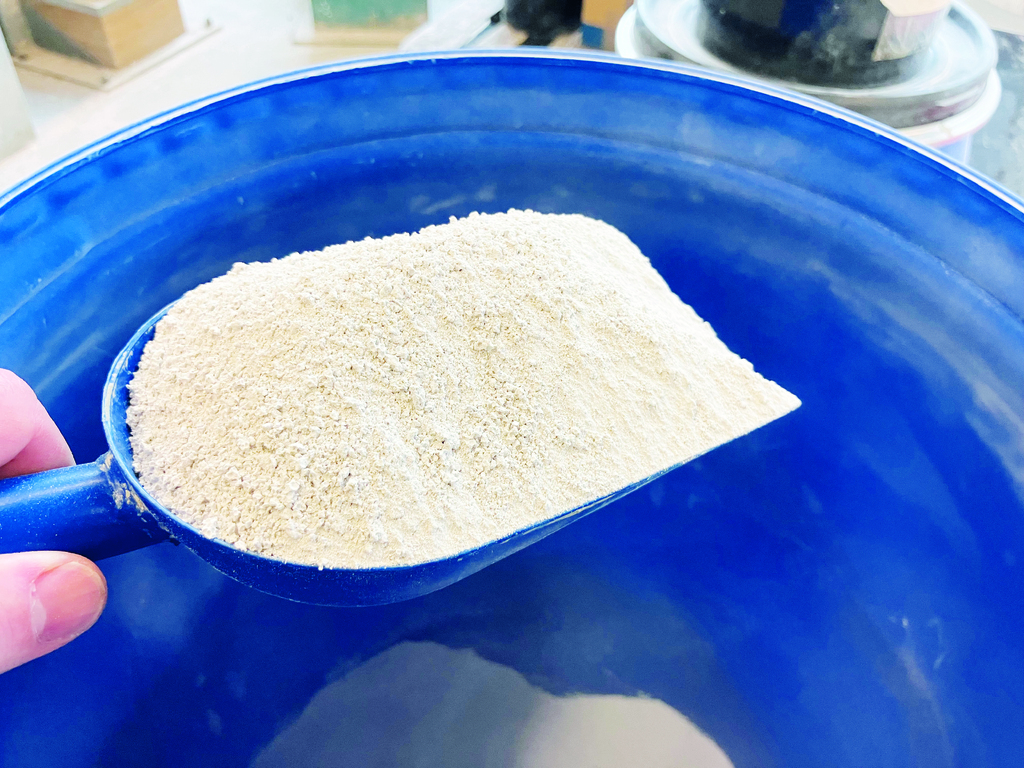
Table 1: AAC powder < 1 mm for lightweight gypsum based building plaster obtained by a screen ball mill
AAC unit | crystallite matrix | AAC powder <1 mm | |||||||
bulk density | age | compressive strength | air porosity | bulk density | skeletal density
| bulk density (loose) | bulk density (grain) | packing efficiency | mean particle size d50 |
kg/m³ | a | N/mm² | Vol.-% | kg/m³ | kg/m³ | kg/m³ | kg/m³ | % | mm |
390 | 25-35 | ~4.9 | 61 | 1000 | 2290 | 570 | 980 | 57 | 0.174 |
590 | 25-35 | ~4.2 | 43 | 1030 | 2450 | 560 | 960 | 58 | 0.134 |
300 | 1-3 | ~2.2 | 65 | 850 | 2270 | 490 | 830 | 59 | 0.269 |
670 | 35-55 | ~2.9 | 42 | 1150 | 2430 | 630 | 1070 | 60 | 0.147 |
450–580 | - | - | - | - | - | 670 | 1090 | 61 | 0.156 |
340–570 | - | - | - | - | - | 710 | 1130 | 63 | 0.162 |
Table 2: AAC granulate for self-levelling mixtures; < 4 mm obtained by a jaw crusher or < 20 mm obtained by a single-shaft shredder
bulk density (loose) | bulk density (grain) | packing efficiency | max. particle size | mean particle size d50 |
kg/m³ | kg/m³ | % | mm | mm |
480 | - | - | 20 | 2.2 |
500 | 910 | 55 | 4 | 0.5 |
660 | 1190 | 55 | 4 | 0.7 |
In addition to the small amounts of calcium sulfate dihydrate, as common in AAC, a contamination with gypsum plaster is likely. Crucial for the utilization of AAC in gypsum based building materials is drying at about 120 to 140°C. Calcium sulfate dihydrate can act as crystallization seed and significantly accelerate the setting process, even in small amounts. If all calcium sulfate dihydrate is converted to hemihydrate, the setting is no longer affected by dihydrate crystals from the AAC and a homogeneous product quality can be obtained. Hence, the AAC should be dry for this process to be economically feasible, which is the case for demolition waste protected from water exposure. Otherwise, waste storage under dry and ventilated conditions may be necessary beforehand.
Gypsum based building materials
Lightweight gypsum based building plaster is a common building material, which so far utilizes perlite as a lightweight aggregate. In comparison to perlite, AAC has a much higher bulk density und mechanical strength. Any larger AAC grains (> 1 mm) would obstruct the finishing of the plasterwork; therefore, a fine powder is desirable for this application. Plaster mixtures can be prepared according to [10] from 55-70 M-% AAC powder, 30-45 M-% calcium sulfate binder and additives. The effect on the density is determined by the volume of AAC powder and the air entraining admixture. AAC powder soaks up the water and releases air from the porous crystallite matrix. Thus, the water demand for standard consistency [10] depends on the volume – controlled by the bulk density of the AAC powder. At bulk densities < 600 kg/m³ a good lightening effect is observed which allows the plaster properties to be adjusted within a certain range.
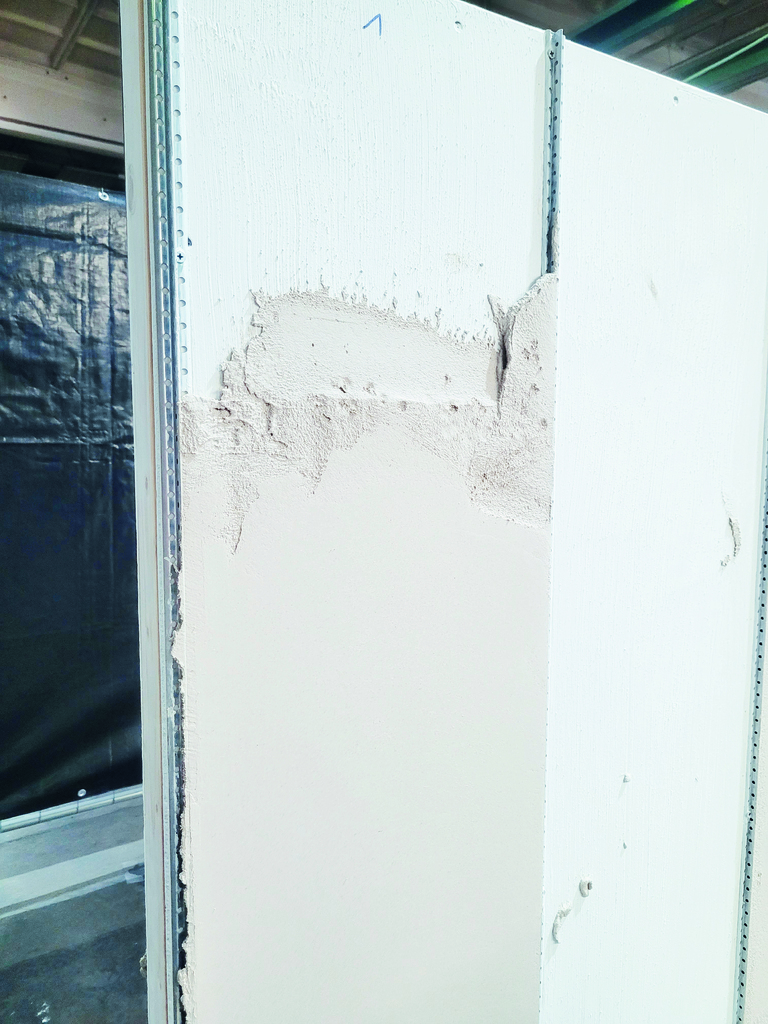
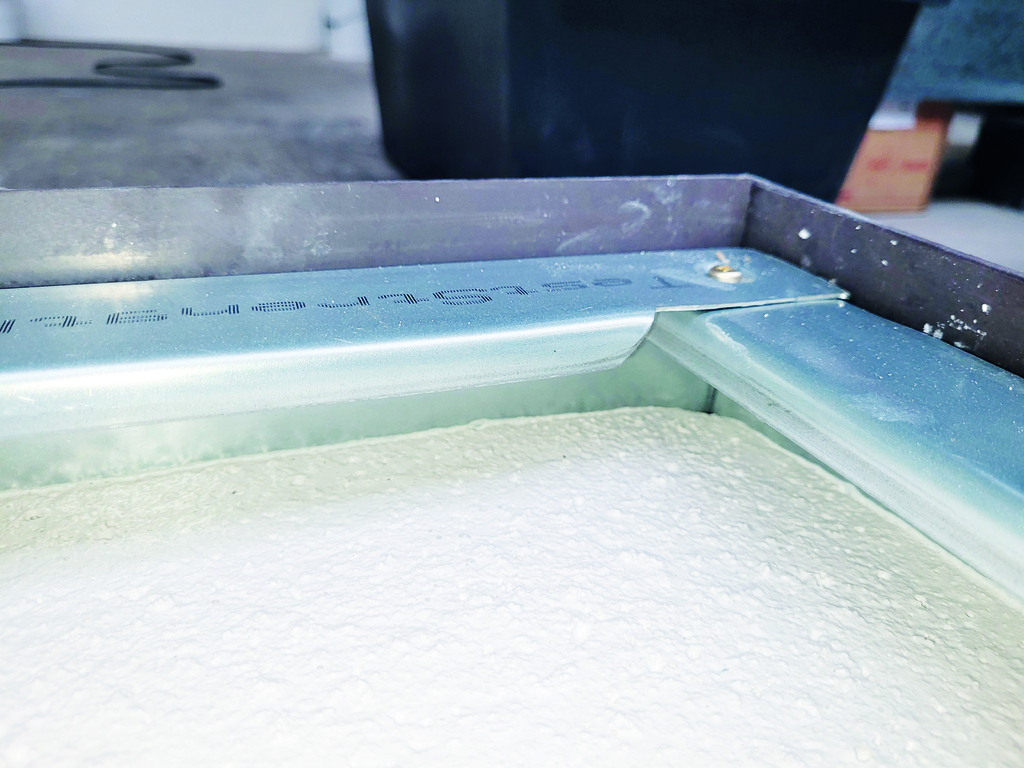
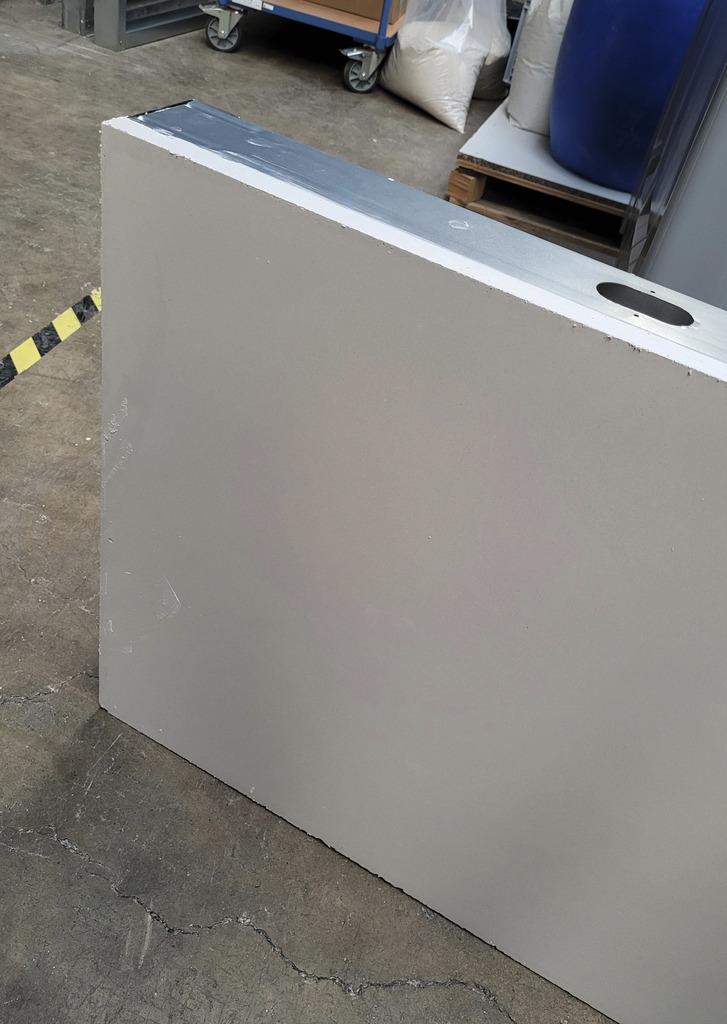
Coarse AAC granulate (> 1 mm) can be used for gypsum-based self-levelling mortars to produce for example gypsum panels or steel-framed wall elements. These mortars are prepared from 40-70 M-% AAC granulate, 30-60 M-% calcium sulfate binder and additives. The surface of these products is defined by the mould and there are fewer restrictions on the maximum particle size of the AAC granulate. However, with increasing granulate size the mortar is less likely to fill out corners and the granulate tends to float. The effect on the product's density is determined by the volume controlled by the bulk density of the AAC granulate. By the use of 60 M-% AAC granulate with a bulk density of ca 500 kg/m³ the dry density of the product can be reduced to 700 kg/m³ while the compressive strength is approx. 3 N/mm² and the flexural strength is 1 N/mm² according to EN 13279-2:2014 [10].
Conclusion and summary
AAC powder < 1 mm maximum particle size is suitable for lightweight gypsum based building plaster whereas AAC granulate > 1 mm maximum particle size can be used for gypsum-based self-levelling mortars. Important parameters for controlling the properties are the bulk density, average particle size and moisture content of the AAC-aggregate. Since most gypsum based applications require drying of the AAC at 120-140°C, its moisture content should be as low as possible. This necessitates storing the production waste under dry conditions. In case of construction and demolition waste the AAC should be of high purity. Plastics and organic contaminants are problematic in any case. High density aggregates for example concrete or brick will deteriorate the lightweight properties. Only contamination with gypsum products e.g. old plaster is of less concern since the material will be calcined anyway. For scale up trials the AAC powder or granulate would have to be available in larger quantities at a homogeneous quality.
Funding
The research project “Gipsgebundene Bauplatten aus feinem Rezyklat-Porenbeton-Brechsand” was funded by the German Federal Institute for Research on Building, Urban Affairs and Spatial Development (10.08.18.7-21.18). The research project “Untersuchungen zum Einsatz von Porenbeton-Brechsanden in Gipsbauprodukten - Ausfachfüllung bei Stahlleichtbaurahmen und Gips-Putz” was funded by the Federal Ministry of Research, Technology and Space (03WIR0317B). SEM and micro-CT investigations were made available by the Core Facility for Multidisciplinary Structural Analysis (DFG: 514140860)
References
[1] Steins, J., Volk, R. & Schultmann, F. (2021). Modelling and predicting the generation of post-demolition autoclaved aerated concrete (AAC) volumes in Germany until 2050. Resources, Conservation and Recycling. 171. 105504.
[2] Kreft, O. (2016). Closed-loop recycling of autoclaved aerated concrete / Geschlossener Recyclingkreislauf für Porenbeton: Closed-loop recycling of autoclaved aerated concrete / Geschlossener Recyclingkreislauf für Porenbeton. Mauerwerk. 20. 183-190.
[3] Lam, N. (2021). Recycling of AAC waste in the manufacture of autoclaved aerated concrete in Vietnam. International Journal of GEOMATE. 20.
[4] Volk, R., Steins, J., Kreft, O. & Schultmann, F. (2023). Life cycle assessment of post-demolition autoclaved aerated concrete (AAC) recycling options. Resources Conservation and Recycling. 188. 106716.
[5] Iucolano, F.; Campanile, A.; Caputo, D.; Liguori, B. Sustainable Management of Autoclaved Aerated Concrete Wastes in Gypsum Composites. Sustainability 2021, 13, 3961.
[6] Hlawatsch, F., Peters, M., Ufermann-Wallmeier, D. (2023). Lightweight Blocks Made Of Coarse AAC-Granules - Recycled Again!, 7th International Conference on AAC, Sep 6-8, 2023, Prague
[7] EN 13279-1:2008. Gypsum binders and gypsum plasters Part 1: Definitions and requirements
[8] EN 1097-3:1998. Tests for mechanical and physical properties of aggregates - Part 3: Determination of loose bulk density and voids
[9] EN 1097-6:2022. Tests for mechanical and physical properties of aggregates - Part 6: Determination of particle density and water absorption German Version EN 1097-6:2022
[10] EN 13279-2:2014. Gypsum binders and gypsum plasters Part 2: Test methods